What grandparents should know about autism

I’m happy to welcome Dawn Dugan to Philosopher Grandma. Dr. Dugan is a licensed clinical psychologist who has worked as a college professor for 20 years. In her clinical practice, All Spectrums Therapy, she specializes in supporting autistic individuals who have co-occurring conditions such as OCD, anxiety and body-focused repetitive behaviors. She and I talked about grandparents' roles in caring for kids who have autism and their families. Dr. Dugan covered basic information about autism as well as advice for hand-on care, family support, and advocacy in tricky situations. She also has a lot to teach grandparents of neurotypical grandchildren about ways to support neurodivergent people. What follows is an edited version of our conversation June 25, 2026.
Welcome to Philosopher Grandma, Dr. Dugan. Let’s start with the basics. What is autism?
Autism is a neurodevelopmental difference. An autistic child's brain develops slightly differently than a neurotypicalchild’s does. The differences may alter the ways they experience the world, process information, and interact with others. One diagnostic feature concerns social communication. For an autistic child, it’s like if you went to a country where you didn't speak the language: You would have a hard time interacting. For example, an autistic child might not understand why they would want to play with someone who’s doing something they don’t like. They might prefer to play alone or parallel play.
Autistic people may also have sensory processing differences. Certain clothes might be uncomfortable. They may not like tags. They might be oversensitive to sights and smells. Others are undersensitive. I worked with a young man who broke his arm and didn't know his arm was broken for a week. Autistic individuals can also show a wide range of cognitive profiles. Some have intellectual disabilities, some have average cognitive abilities, and others have above-average abilities or areas of exceptional strength. Cognitive ability does not predict the level or type of support an autistic person may need.
Autism impacts each affected person differently.
Could you comment on the difference between a medical model of autism and a neurodiversity model? What might the different understandings bring to the table for a grandparent trying to care for their grandchild who has autism?
We diagnose people under the medical model, using the DSM-5 criteria. The reason that we give a clinical diagnosis is primarily so that the person can receive supports: In order to get insurance to pay for services, you have to have a diagnosis. Early intervention is helpful because in the first five years of life, the brain is neuroplastic, meaning it’s better able to change, like to learn things. Getting early support like occupational therapy (OT), or learning communication strategies helps the child navigate a neurotypical world.
But the medical model looks at autism by asking “What are the deficits?” And is that helpful for grandparents? I don't think so. I think it's much more helpful for grandparents to view autism from neurodiversity perspective. Rather than, “I have to fix my grandchild“ the perspective is, “I have to accept my grandchild has strengths as well as things that are hard for them. I don't have to be embarrassed or feel shame for how this child is acting. I maybe have to grandparent a little differently. I have to understand.”
I work with families to help them understand that autism is not a disease. It's not something that needs to be cured. But sometimes individuals with autism need support because our world is not designed for them. We operate in a neurotypical world. So how can we support someone who experiences these differences?
What causes autism?
First, to eliminate some misconceptions: Autism is lifelong. You won’t catch autism and it won’t happen later in life. Also, vaccines do not cause autism. There is no evidence of a relationship between getting a vaccine and autism. And it’s not caused by the mother being non-responsive or because she had postpartum depression.
What we know is that there's not a single cause for autism. Environmental factors such as older maternal age, pollution, chemicals, birth difficulties (premature birth, very low birth weight, oxygen deprivation to the brain) may play a role. Protective factors include proper prenatal care and maternal nutrition (folic acid, vitamin D). Access to prenatal care is extremely important. But there is also a strong genetic component: Identical twins will both have autism, and if a family has one child who is autistic, it is more likely that they have another child that is autistic.
What stereotypes about autism should grandparents be wary about?
There are a lot of stereotypes about autism, either that autistic people have superhuman abilities or they can't do things that they can do. It’s important to remember that autism looks very different from one person to another. There’s the apt quote, “If you’ve met one person with autism, you've met one person with autism.”
Media often gets this wrong. If you go back in time, some of the earlier representations of autistic individuals are extremely stereotypical and skewed. One depiction that comes to mind is Raymond in Rain Man. People with autism are not typically savants. But people would generalize from that portrayal and say, “Oh, what is this individual's superpower? Can they count cards? Can they read quickly?”
More recently, The Pitt does a very good job of portraying autistic individuals, for example, by showing some of the ways autistic individuals are infantilized. One of the main characters is probably neurodivergent, and she has a sister who has differences and needs more support. The sister has a sex life, and the main character’s like, “How are you having sex?” Well, she's an adult and that's normal. And she enjoys it.
How do you help families understand how autism affects their child or grandchild?
As a therapist, part of working with children and even young adults is including the family. You can’t just drop your kid off and pick them up at the end. That’s not how therapy works with kids. The family needs to support what the child is working on with the therapist. If a grandparent is a primary or frequent caregiver, it’s important for the therapist to include the grandparent as well.
And families may have a hard time understanding what's going on with their autistic child. Parents and grandparents often don't understand how their child or grandchild can be so good at one thing, but something else is so difficult for them to do. Why is it that they do so well in school, but they can't keep their room clean? Or why is it that they are fine talking at home, but when we’re in a social situation, they shut down and they don’t talk? Why can they look at Legos all day long, but they can’t do their homework? Why does it take them so long to get ready? Why do they have to have all the same t-shirts? Why do they only eat chicken nuggets?
So I always start parent or family meetings with “Autism 101”: “What does your child do well? Let's talk about their strengths.” (It’s a bad sign if a family responds, “Oh, my God. This child is like a demon.”) We talk about the strengths and using those strengths to help with things that might be challenging. Then we identify the things that are challenging, and I emphasize that the child is not having difficulties on purpose or to be a pain. Sometimes it takes many of these Autism 101 meetings for the message and skills to sink in.
I usually also recommend going to the website of the Association for Autism and Neurodiversity. The website has many, many resources such as articles and blogs for families of autistic children and adults. It also has free support groups that welcome grandparents, parents, and siblings to come and hear about different experiences, talk about their own experiences, and get some good information. Even if family members just go once, it can be really helpful to sort of see other people's experiences and to get good information.
I also talk from a neurodiversity-affirming perspective about autism falling on a spectrum. Historically, autism was divided into high- and low-functioning. Currently, our system differentiates by level of support and has three categories. Level 1 requires supports, Level 2 requires substantial support, and Level 3 requires very substantial support. School-age kids might be in a typical classroom with accommodations, a special ed program, or go to a specialized school. The least restrictive environment is prioritized.

What are some indicators that grandparents will be good at direct care of a grandchild with autism, and what might suggest that there’s not a good fit?
A few indicators can hopefully help grandparents who would be good or poor fits recognize themselves, or they may help parents who are trying to decide who cares for their child.
Some of the indicators have to do with the amount of support the child needs. Some autistic children need to have a paraprofessional with them. Others need a program that they go to instead of being cared for at home. Some autistic children with different needs or less need for support are a good match with their grandparents.
The grandparents’ abilities, attitudes, and availability matter, too. I think some grandparents are great caregivers in general for grandchildren. My own child was raised by my mom. When I went to graduate school, there's no way I would have been able to afford childcare. But grandparents who care for an autistic child need to be able to adapt to the child’s routine. It won’t be a good match if a grandparent is quick to anger, or is resentful towards the child who exhibits behaviors that are not “perfect,” or if the grandparent is inflexible. Or if the grandparent believes that autism is just a discipline problem. Similarly, if they hold onto stereotypes, or are not willing to do any research or reading or talking to parents or professionals, then they're probably not going to be a great caregiver for an autistic child.
And many grandparents have other limitations. Their physical health is a factor. Also, some grandparents have a lot on their plates; maybe they're caring for a partner or they have other responsibilities. If a grandparents can’t watch the child full time, it doesn't mean that they are failing as grandparents. They’re just not able to do that. And that's okay.
Parents can also offer support for grandparents who do offer care like finding appropriate activities for the child, such as music lessons or other classes. Or maybe the grandparents can't watch the child every day. Maybe the child is in some type of program three days a week, and grandparents watch the child two days a week.
Children with autism often have some atypical behaviors and activities or situations they find difficult. Please help grandparents understand what’s going on with these, and what they can do to help.
Meltdowns. One thing that happens with autistic kids is that they have meltdowns. Meltdowns are not the same as tantrums. Tantrums tend to focus on changing someone else’s behavior, whereas a meltdown is a response to an individual’s nervous system becoming overwhelmed. All kids have meltdowns. But it’s not as frequent in neurotypical kids. For neurotypical kids and adults it’s like we have a dimmer switch: We can have low light, medium light, or high. Neurodiverse kids usually don’t have the dimmer: they are off, on, or really on. There's not the in-between, that stage of starting to get uncomfortable. It could seem like the kid is fine, and then all of a sudden, the kid is pulling off their shirt, screaming, and crying.
So to prevent meltdowns, you have to have a sense of what flips their switch: What are their triggers? Maybe it’s doing too many things. A day out to breakfast, then to the movies, then to the mall might be overwhelming. Certain social situations could trigger a meltdown. It could be sensory stuff, like its being too hot outside: They have a meltdown because they're not able to communicate, “I'm really hot. Can I have something to drink?” Change of schedule is another common trigger. Schedule changes can be very challenging for children in general, and are often even more difficult for a child who’s autistic. So you have to be thoughtful that if you told this child that you're going to take him to the park at a certain time, then you probably should do that. Maybe it helps to have a visual schedule so the child knows what to expect. Maybe offer choices: “Would you like ice cream or cake?” Again, we make similar adaptations for any grandchild, but there may be more urgency or less flexibility with an autistic grandchild.
Parents are often a great resource. They can tell grandparents things that the child responds well to, things that are triggers, and things that are really challenging for them, showing what grandparents should do or not do when they’re caregiving.
Grandparents also need skills to recognize when that switch is about to flip. This skill is an extension of what adults do with any child—maybe observed with a bit more urgency. As a therapist, I try to help the children themselves recognize that they are getting overwhelmed. With little kids, we talk about the green zone, which is you’re good. The yellow zone is when you're starting to feel overwhelmed. And the red zone is when you’re overwhelmed.

So how does the child recognize the yellow zone? Or how does the grandparent recognize the yellow zone? Stimming (see below) might be a cue to a caregiver that the child is in that yellow zone. Perhaps the child starts pacing, or plays with her fidget, feels hot, or can no longer communicate. Maybe they become quieter, ask repetitive questions, cover their ears or want to leave. The child might be able to say something to the grandparent when this happens, or they might have a card system and so they can point to the yellow zone.
Once it’s clear the child is getting overwhelmed, it’s time for a break. Grandparents who care for the child regularly can create a calm-down corner with low light, some storybooks, and some sensory toys like a yoga ball or a fidget box. If you’re out and about with the child, taking a break involves reducing sensory input and finding a quiet place. This could be a break in the car, moving to an unoccupied area of the playground, or taking a restroom break.
If, despite these efforts, the child does have a meltdown, be sure they aren’t around things that could be hazardous. Also, the grandparent should try to stay calm and reduce the demands on the child.
Notice that during a meltdown is not the time to have a conversation about what's going on. “Oh, I see you're really upset, sweetie. What's happening?” No, they're not hearing you. But after the child has processed everything and has calmed down, you might talk with them. “We all get overwhelmed sometimes. When you're feeling that way, let me know so we can take a break.”
As you learn your grandchild’s signals and limits, you may be able to help them extend their capacity a little. Maybe they usually can handle half an hour at the mall. Maybe next time five minutes longer? You don’t want to completely avoid everything a child is triggered by.
Apraxia. Apraxia is a difficulty coordinating motor movements. It can look like the child’s not cooperating or is just being difficult, but they are actually having trouble putting together the motor movements to do what they need to do. Caregivers need to avoid thinking that the child is being slow or ignoring them on purpose. Instead, they need to be patient with the child, noticing that certain tasks just take longer than expected, and accept the fact that this is how their grandchild’s body works differently.
Comorbidities. “Comorbidity” is the medical term for having more than one medical or psychological condition happening at a time. Children who have autism often also have ADHD, learning disabilities, obsessive compulsive disorder (OCD), body-focused repetitive disorders, Tourette’s syndrome, tics, sleep difficulties, social anxiety, depression, or other concerns along with the autism. It takes a skilled clinician to recognize what challenges are owing to, say, OCD vs. autism and to treat OCD as OCD—similarly with the other comorbidities.
If an autistic child has a comorbidity (or more than one), it’s important to learn about that other diagnosis and how it might require different strategies. For example, if your grandchild has OCD in addition to autism, you might have to change how you reassure them. Typically, if a child asks, “Did I do that good?” You’d say, “Yeah, you did that great.” “Are you sure?” “Yes, of course, I'm sure.” For the child with OCD, this may keep going: “Do you love me?” “Yes, I love you.” “Are you sure you love me?” “Yes, I love you.” In this way, typical reassurance can maintain an OCD cycle. The therapist would teach other ways to respond or to redirect the child. Or maybe the child avoids social situations not just because of autism, but because they have a panic attack whenever they're around other people; learning how the therapist works with the child at managing social anxiety will help the grandparent be with the child in social situations.
Stimming. “Stimming” is repetitive movements or noises done to self-sooth or self-regulate. Neurotypical people might twirl their hair, tap their foot, or click a pen. For autistic people, stimming is often more pronounced: They might rock, flap their hands, or repeat a phrase like, “I'm a good boy. I'm a good boy.” It’s important for grandparents to know that stimming isn't bad, and that it shouldn’t be discouraged unless it’s dangerous. If the stimming is harmful, like the child hitting their head on the wall, then distraction or offering something else for sensory soothing is important. But if they're rocking or they're flapping their hands, it’s fine. There's nothing wrong with the child doing that.
In the past, it was encouraged to make an autistic individual look neurotypical through “masking” and not displaying these types of behaviors. That approach backfires, leading to anxiety, depression, and withdrawal. We all mask sometimes, but if a person masks their whole identity in public, by the time they get home, they’re exhausted. So it really upsets me when parents or grandparents say, “Oh, stop with your hand. Stop doing that thing.” Hey, it's not hurting anyone. It's helping them. Let them do it.
That approach might be hard for grandparents who have strict rules for themselves and others about public behavior. How do you help people change such attitudes?
Education is the key: Education helps with seeing that behaviors the grandparents might be concerned about are not a reason the grandparent or the grandchild should be embarrassed. Having more information about autism can also help a grandparent understand ways they can change their grandparenting style to better care for an autistic child.
Is there some reality, though, in the concern that people will react negatively to an autistic grandchild or to the grandparent when they are out and about together? If that happens, what should the grandparent do?
Basically, grandparents can learn ways to advocate for the child, or help to teach the child to advocate for themselves. Because while more people have a better understanding that autism is a spectrum, caregivers will sometimes run into stigma associated with autism. Sometimes it’s negative assumptions about what an autistic child can’t do. Or adults might think, “Oh, that child is so rude, so lazy. Look at this kid running around. Where's the parent?” Kids might whisper, “This kid is weird.” And there's still a lot of bullying that happens, which can be very subtle. The child might be left out, or someone might call him names.
Script for adults. So it helps to have scripts for what to say when someone gives you the stink eye or says, “Oh, that child obviously needs a nap,” or offers unsolicited advice. You can simply say something like, “My grandchild has autism and is just feeling a little overwhelmed by this lighting. If we give him a moment, he’ll be okay.” Or, “This child is autistic, and you know what? She’s not misbehaving. She’s just having a hard time communicating (or just feeling really overwhelmed because we just came from school, or…) We’re okay, and we're working through it.”
So the grandparent advocates for the grandchild in a calm manner. The worst thing is to get agitated or embarrassed or to try to unskillfully stop the child’s behavior. You’ll end up with more eyes on you.
Script for other children. Lots of kids these days are familiar with autism because of classmates or siblings, and they accept the differences. Still, as I said, that’s not universal and there is bullying or sometimes fear.
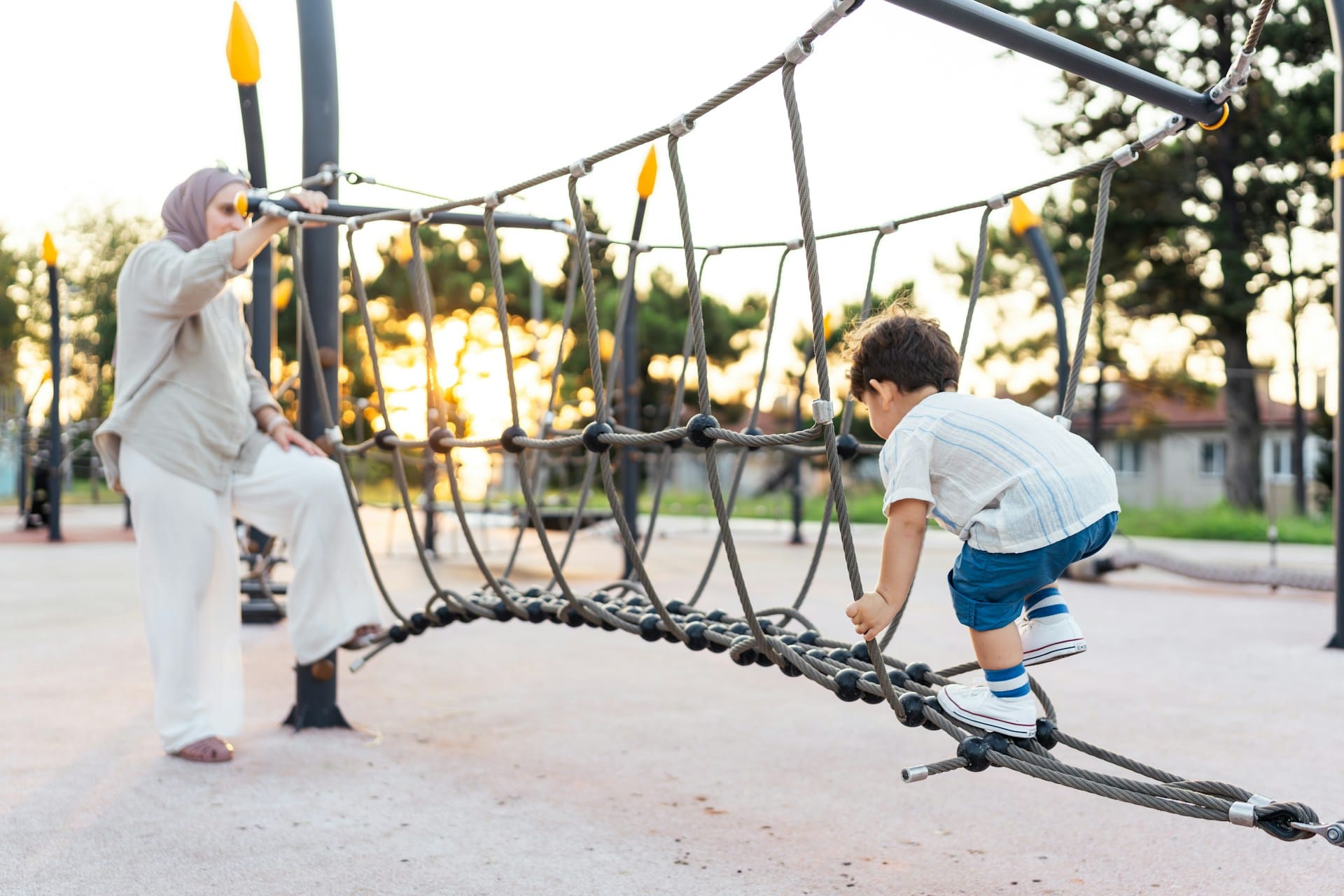
So let's say your autistic grandchild is nine years old and you and the child are at the playground. The child and you can hear “That kid's weird” from some children in the background. This is a potentially tough situation. But as your grandchild’s advocate, you can't just let other kids say mean things. Now, you don't want to come across being rude and nasty to the other kids. But as a grandparent, you might step in and say, “We don't use words like that,” or, “That was really unkind,” or, “When we play together, we should be respectful.”
You might also explain. For little kids, you might say something like, “All kids are different. Everyone has things they’re good at and things that are hard for them. For Ahmed, when things are really loud, it's scary for him. Susie’s not going to want to go into the sandbox because it doesn't feel good on her skin.” Or, “Sometimes we all get a little overwhelmed. And right now, Bobby is just feeling a little overwhelmed, and he’s going to take a break. And when he comes back, he’s going to be okay.” Older kids might know what autism is, so you could say, “My grandchild has autism. His brain works differently,” again following up with specifics. A calm, matter-of-fact explanation is better than becoming defensive.
Another goal is that children advocate for themselves, using words like “My brain works a little bit different, and that's okay.” Grandparents can support the child in doing this.
Grandparents can also help grandchild learn to navigate social situations. Perhaps the grandparent prepares the child ahead of time by previewing the scene and providing some social scripts. For example, they explain what the playground looks like, then say, “There may be kids that you know. There could be kids you don't know. It's okay to play with any of the kids on the playground. If you want to play, this is what you do. You say, ‘Can I help build the sandcastle? or can I have a turn next?’” Then they can praise the child afterwards: “We went to the playground! You did a great job helping with that sandcastle. That was amazing. So proud of you.” Meanwhile, know their limits. Have an appropriate time limit for an activity like the playground that is loud and has a lot going on, because it could be hard to navigate.
Is there a privacy issue for the child with explaining to others that the child has autism?
Naming the autism is an individual decision, but I do think that the child is going to have to learn how to advocate for themselves. Not every place is conducive to autistic children’s or adults’ needs. Being able to advocate for what you need for support or accommodations is important. A child might need to ask the teacher for a break. An adult might need to ask for a quieter table at a restaurant. For example, no one likes going to airports. (That's why we do TSA pre-check, right?). It’s a lot of lights. It's a lot of noise. There are smells. There are strangers. It's rush, rush, rush. But if you call an airline ahead of time and you say you're an autistic individual or traveling with one, oftentimes you can get expedited check-in. Some airports even have a quiet room or sensory room for autistic people. Nonverbal autistic people can use premade cards that explain that they are an autistic individual.
So each family has to make their own decisions of what to disclose and what not to, and older children should be able to decide how, when, and to whom they disclose their autistic identity in order to promote autonomy. But I think it is helpful to disclose. Autism is not something to be ashamed of, any more than religion, ethnicity, or gender. It's part of your identity, and you should be able to disclose your identity.
How can grandparents support their adult children who have a child with autism?
I would say the first thing is to ask what they need help with: “Hey, I see there's a lot on your plate.” That always goes a long way. That said, even if a grandparent can’t take care of their grandchild with autism regularly, like if they live far away—or even if caring for grandkids at all is not their cup of tea—there are lots of ways they can support their adult child.
Grandparents who live nearby can help with daily tasks, like going to the store for the family. They could give the parent a break, say by being at their house for lunch, to let the parent take care of some essentials like phone calls. They could provide transportation, like taking the parent and child to a doctor’s appointment. (Maybe the parent can get that phone call in while on the drive!)
Those who are good at organization and coordinating could help with navigating and arranging resources like evaluations, OT, or speech therapy.
Some grandparents can help financially, maybe covering the costs of therapy, a specialized preschool, or childcare that can give adult children some relief.
And just being there. In the beginning, any new parent will wonder, “Am I able to be a good parent? I'm so overwhelmed. I thought these were supposed to be the best years of my life, but this kid is really driving me up the wall. I don't know what to do…” As their parent you can let them know they can handle it and that they will do a good job. And be their advocate: As it becomes clear that their child is autistic, support your adult children's decisions. Especially, support their decisions to get outside supports. Give the message, “It doesn't mean that you’re a failure as a parent. Your child just needs more supports.” And remember: No one in the family is going to automatically be an expert in autism. Giving emotional support as your adult children learn, and as you do, goes a long way.