Commit, for the grandchildren

For the sake of our children and grandchildren and everyone else’s children and grandchildren, it’s time to make a long-haul commitment to help our neighbors and preserve our democracy. We need to commit to action now, because our democracy, our rights, and our humanity are at stake. Otherwise—and maybe even if we do—the abuses we’re experiencing will spread. More children and grandchildren will have armed, masked agents at their school doors. More children and grandchildren will be stuck at home unschooled. More children and grandchildren—and their parents—will be denied their rights and live in fear.
But commitment is hard, even if it’s for your grandchildren. So I’m going to write about why commitment is hard and why we have to do it, anyway. And a bit about how. I don’t do this to whine (!!), but to help myself and hopefully others get over our stumbling blocks.
One point to clear first. Commitment to neighbors and democracy is going to look different to different people. All my 93-year-old mother can do is give money. So she gives money. Others have no money to give, but they can lend a hand. Some people, for reasons of health, truly pressing responsibilities, and the like, simply can’t provide for others—maybe later. So before committing, everyone needs to assess their own capacity in ways that are both kind and honest.

What's stopping us–really?
That said, it’s important not to mistake inconvenience for incapacity. Because no matter how important a goal is, and how convinced you are that it is the right thing to do, committing to something new always involves giving up something else. You commit to losing 10 pounds for your health, but you have to give up that nice full feeling. You commit to your partner in marriage, but you have to give up other potential relationships. It also involves leaping into the unknown. Philosopher L. A. Paul points out, in the context of becoming a parent, that you can’t even make a life-changing commitment rationally, based on judging what it will be like. That’s because there is too much you don’t and can’t know about how a life-changing choice will change you—your attitudes, priorities, even your personality. Hence the mantra “one day at a time.”
A few people—whom I greatly admire—see what justice work is needed and just pour themselves into it. Ain’t me. I constantly second-guess myself. Partly that’s for relatively blameless reasons: I’m committed to a lot of other worthwhile endeavors, especially caregiving. And then there are reasons in that gray area that fades into the blameworthy excuses: The blog is my contribution. I need a “clean car” (one that ICE hasn’t traced). I can just give money. I’m too shy. I need to exercise. Etc. All the while knowing that more hands-on, feet-moving, heart-open work is needed.
It can also be hard to choose what to do. Again, I admire the people who are simply called to do some specific act, seeing clearly the path that they need to walk in the moment. Like Renee Good and Alex Pretti. Like friends who have been activists for years, or who have linked seamlessly into neighborhood efforts. For me, it’s so much easier to stay inside and take care of the family (having a long-standing call to do that), that I don’t have the habit of seeing where I am needed, or thinking about myself being needed in other ways. Plus, it isn’t always easy, in the sea of messages, groups, and social media, to see where to put one’s efforts. How to find the right fit? And how to choose, when the need is so great?
Third, sticking with it long-term. It’s easy to keep doing something you like doing—even easier to keep doing something just because it is a habit. But most resolutions to make a change to your habits or to do something hard die out quickly. So part of commitment-phobia stems from understanding about ourselves how hard it is to keep it up: Why set ourselves up to be embarrassed or feel bad because we fail to follow through?
But you know those people I admire? One thing they have in common is that they have burst past that agonizing to realize and embody the fact that the current moment is not about them as individuals. It’s about all of us working for all of us and raising our collective voices and collectively using our hands and feet and resources to help one another.
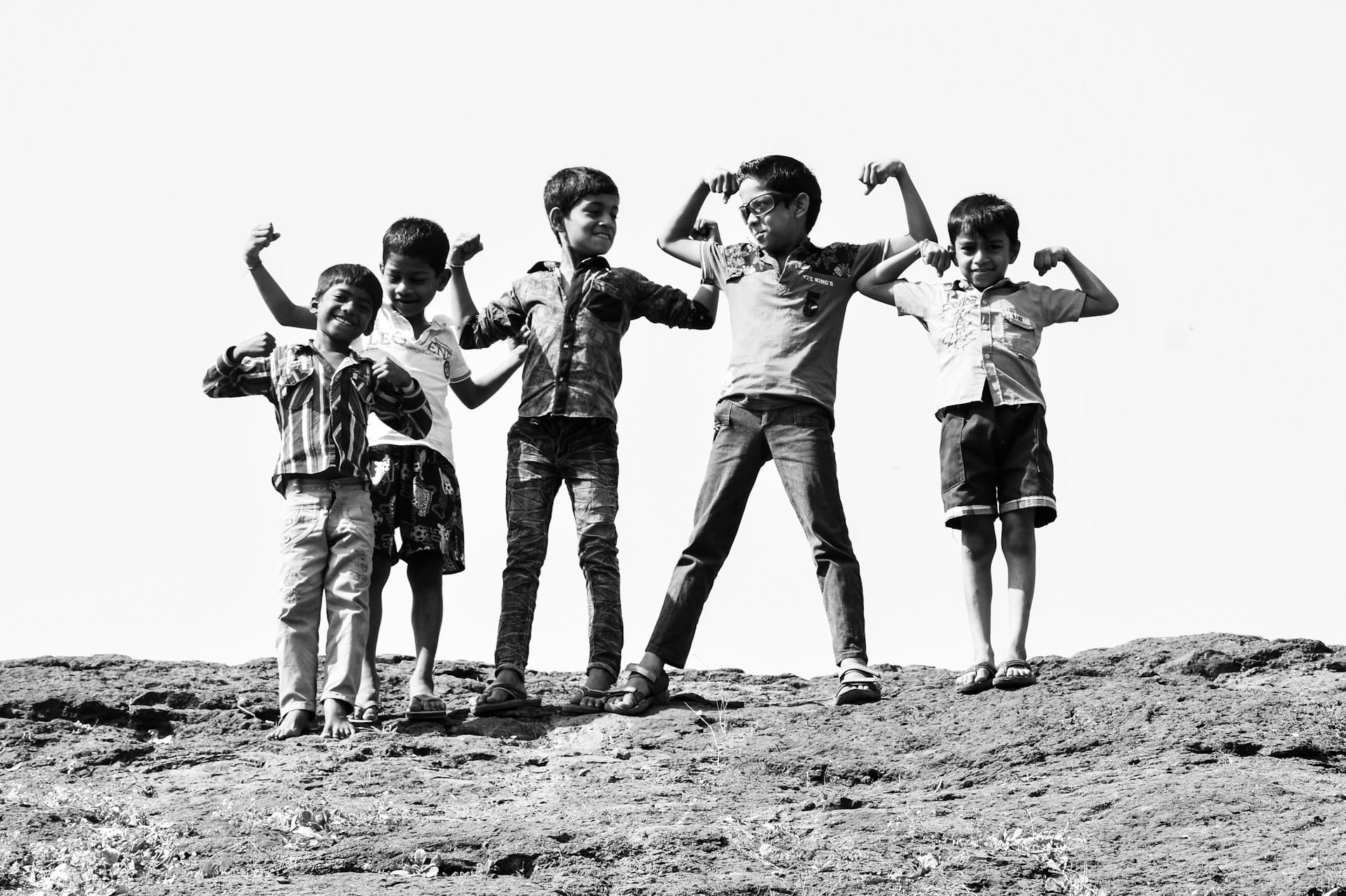
Ready for action
Practically speaking, I’m seeing three ways to edge closer to being like the people I admire:
The first is to clarify the value my actions will serve. Again, not so easy: We’re in a troubled time that can make it hard to commit to values or ideals. Cynicism—much of it deserved—about religion; doubts—many of them deserved—about ourselves as a species; perspectivalism that allows “true for me” to stand in for “true” (sometimes important, but hazardous); and outright subversions of truth (lying, manipulation, propaganda) by humans and AI. All this makes our shakiness in grasping a guiding value or handrail understandable. It makes feeling rootless or hopeless understandable, too. But those people I admire have that grip. Some find it in their religion; others are humanitarians; but they all grasp some guide, at least intuitively—love, human dignity, justice. And they see where it leads and follow. For a beginner like me, making a value my stake in the ground gives starting point and a bedrock to which I can come back to check myself.
The second way to become more like the people I admire—and probably the most secure one—is to surround myself with people I admire, who are doing the things I think I should do. (Note that the converse is horribly true, too—surround yourself with evil or apathy and those will become normal to you.) My approach is to march when I can, go to church, and to join those admired friends in groups they belong to, like our neighborhood Signal group and the interfaith social justice group Isaiah. Others in Minneapolis choose to join the Singing Resistance; or join the groups guarding their children’s schools against ICE, carpooling immigrant neighbors’ children, or ferrying groceries to fearful families; or pack groceries, stock food shelves, or pray with together. Some coordinate online to put their bodies and freedoms on the line, tailing ICE and blowing whistles. And it’s not just Minneapolis! Longtime residents of Springfield, Ohio, just claimed their value, “Love thy neighbor,” to stand with Haitian immigrants in their community.
Which brings me, briefly, to the third way. Which is to get in the habit of saying “yes.” If you read about an action that inspires you, figure out who organized it and sign up for their next thing. Then go. Insert Nike slogan here.
Wherever you are, I hope you’ll commit—as hard as it is!—to joining a group of others to help Minneapolis, your own neighbors, and US citizens as a whole over the long, long haul to 2028. One day at a time. And if you don’t have another guiding value or goal, “For the grandchildren!” will do.