Contagious! Are they invited?
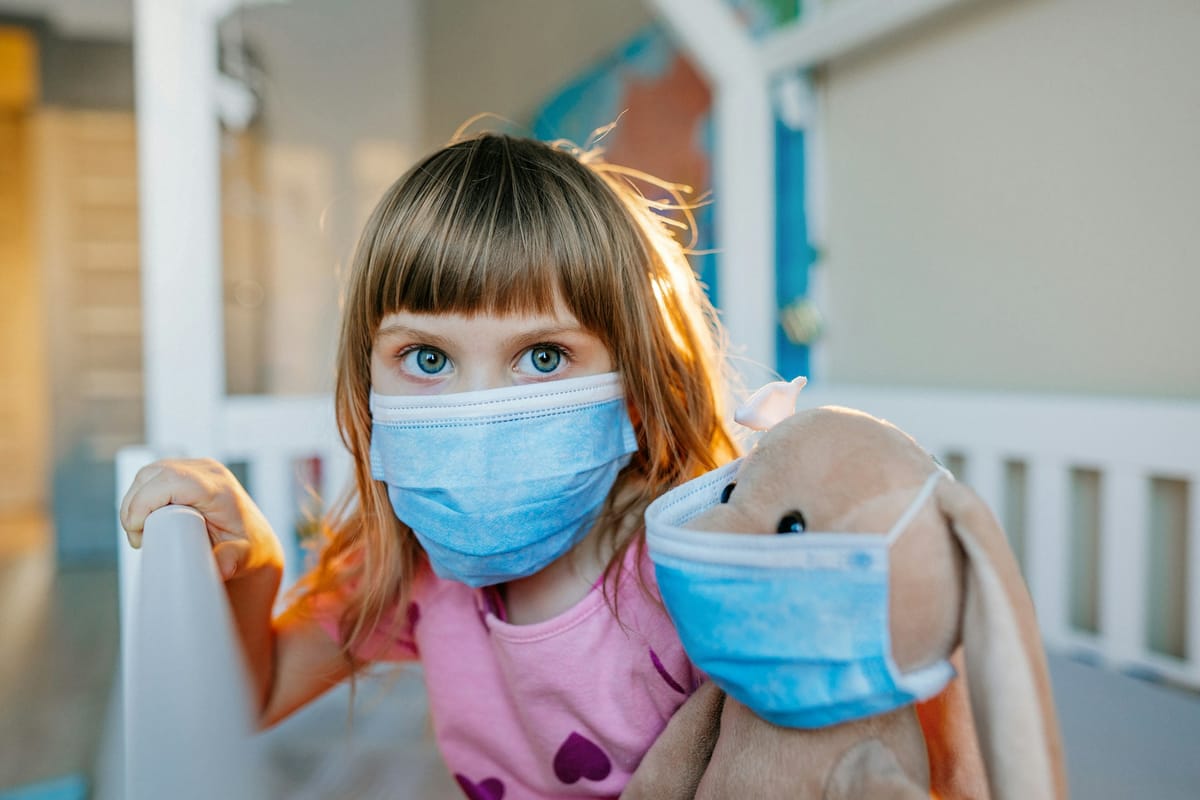
Influenza disrupted our 2025 family Christmas. Before the holiday, one family’s surprise sickness onset exposed two other families, so between actual illness and worry about pre-symptomatic contagiousness, only some gathered. We thought we’d make up for it on New Year’s Day, but continuing illness intervened. Some of us gathered, but—wouldn’t you know!—an attendee came down with influenza the next day, having exposed everyone there, including Baby Granddaughter. As I write, it looks like all are in the clear (knock on wood, fingers crossed).
Those episodes got me thinking. Did we make the right choices? Disappointing spoiler: I don’t think there’s a single, clear answer. How so? Aside from the basics like getting vaccinated and staying home when you’re sick—which have been proven over years to reduce risk for individuals and those around them—people exercise caution around infectious diseases in statistical and ethical gray zones, where degrees of risk are balanced against degrees of benefit. So even families like ours, where we agree on the basics (add in “wash your hands!” and “cover your cough!”), can disagree about what to do around illness or exposure to illness. Despite my non-conclusion conclusion, then, I figured that walking through some of the tricky parts in deciding what to do might help other people make choices for their families—or at least to see or discuss more clearly what’s behind different points of view. I came up with four main trouble spots: Emotions, lack of social consensus, risk/benefit analysis, and ethics.
Why is excluding for illness tricky?
First, emotions: Emotional reactions to the disruptions can be both deep and various. I, being relatively risk-tolerant when it comes to infectious disease, was bitterly disappointed that we couldn’t be together at Christmas (to which reaction I lectured myself, “Oh, grow up, Grandma!,” to some effect). For those on the risk-averse end, the exposures and risks of exposures caused fear. Others were undoubtedly exasperated by hand-wringing at either end! None of these reactions is “right” or “wrong,” but being attuned to the variety and possible sources (which are equally various) can help negotiate the feelings.
Second, there aren’t settled attitudes or protocols for making the gray-zone infectious-disease decisions (by which I mean decisions beyond the basics like stay home when you’re sick). Probably the lack of consensus has to do with fast changes in both medicine and diseases. Back when we grandparents were kids in the 40s-60s, vaccines for childhood illnesses were nonexistent or novel. Medicine introduced polio vaccines in 1955, measles in 1963, mumps in 1967, rubella in 1969, and the combined MMR vaccine in 1971. So of course we and our friends routinely caught those diseases. Even when our kids were kids, pre-varicella vaccine (1995), chickenpox was still a childhood standard. Most of us didn’t hold chicken-pox parties, but people didn’t get too worked up over exposure, as exposure and illness seemed inevitable. That resigned attitude may still influence a lot of us.
And then there was Covid. Some of us went into deep Covid bubbles; others had to keep going out in the world, like it or not. But even for those on the risk-tolerant or risk-required ends, Covid chatter and decisions heightened awareness of exposure consequences for vulnerable populations—the unvaccinated, immunocompromised, elderly, and babies. Medical concepts like morbidity and mortality statistics, infectious periods, and herd immunity became commonplace. And ethical concepts like protection of and responsibilities toward others did, too. Practical steps like regular vaccination, masking, and home testing for disease cause became routine. Andthere was a backlash to all that. MAHA-supporting parents, for example, don’t typically vaccinate their kids against Covid or flu. Fringier, some people in MAHA-affiliated communities even celebrate the return of childhood illnesses like measles. (These attitudes/choices call into question my assertion that vaccination is a “basic,” but I’ll stand by my claim!) Notably, however, about 85% of MAHA-supporting parents get their kids MMR and polio vaccines, so some agreement holds.
But I digress…The point was that attitudes and protocols aren’t settled, partly for historical and political reasons. The lack of settled social guidance leaves decision-making to individuals, with all the puzzles that introduces.

The third point is one of the hardest: We each weigh risks and benefits of actions differently. Why? The risks and benefits are often unclear, and they differ for each individual, and some but not all of us are making decisions forother people, like children or elders. Regarding influenza risk-avoidance, consider first the statistical vagaries. Sure, it’s absolutely clear that contagious diseases spread to others (classic tautology). But how likely is the spread, in any given situation? How long and how close was the contact? How was the air flow? How great an individual’s susceptibility? Etc. And, sure, for some diseases there is risk that any given case will be severe, even life-threatening. But how great a risk? For influenza, risk varies year to year. In a high-risk season like 2024-25, children 0-4 had a 14.4/100,000 risk of hospitalization; babies under six months had maybe double or even triple that rate—so similar to that for elders, at 31.4/100,000, or about 0.03%, maybe 0.05% for infants. The same season, the risk of influenza-associated death for babies under 6 months was about .001%. Under those umbrellas, individual risks vary: For example, risk for babies under 3 months is reduced if their mother was vaccinated during her third trimester.
So you read those statistics (maybe!—more likely you just have a vague idea), and then you decide, is the risk high or low? You might conclude that the odds of hospitalization or death from influenza are quite low. On the other hand, if you have been on the wrong side of statistics in the past, having experienced a rare illness or some other catastrophe, you might say a 0.05% risk is considerable, and even worry about the 0.001%. In addition to the raw data, a person’s degree of risk aversion is often a large factor in their decision-making process.
When it comes to infectious disease, the greatest benefit of risk avoidance is, of course, staying healthy. The benefits of downplaying risk for the sake of holiday or other gatherings are arguably soft: Togetherness, fun, tradition, family bonding, not wasting all that planning and prep…Still, the pull of these joys is compelling to some individuals (when the risks aren’t high), and not so much to others. In interpreting and acting on the statistics, we’re often drawing on emotions (see under “First,” above).
And finally, the ethics: If you take Anthony Weston’s deceptively simple definition of ethics—“…a concern with the basic needs and legitimate expectations of others as well as our own”—one point is clear, and that’s that your personal risk/benefit balance (which is one way of analyzing your own “concern[s]”) is just part of the equation for a person who wants to act ethically. The other part is “the basic needs and legitimate expectations of others.” Of course people have a “basic need” to be healthy, and so to avoid influenza if possible. Our family members who were themselves sick or had a sick kid realized this and stayed away. But what about the risk that one might be sick? There’s that period before symptoms that you’re contagious and not knowing it…so should you stay away if you have been exposed? avoid exposure to protect others? Back in Covid days, a lot of us did those things. But most of us don’t worry as much with influenza or current Covid—we go about our jobs and activities and then participate in gatherings or caregiving when symptom-free. When I go to choir (all that close-quarters breathing!) and then care for my elderly Mom or Baby Granddaughter, I’m tacitly asserting that these at-risk individuals don’t have a “legitimate expectation” that I stop my other, valued activities. Similarly for people going to work or school, who have their own “legitimate expectation” of earning an education or income. And one more amorphous zone—how much symptom is enough to decide “uh-oh, I’ve got it!” or “uh-oh, my kid’s got it!”? Itchy throat or sore? One cough or a dozen? Tummy ache or fever? Does the person have to feel sick? Even with influenza, which typically hits fast, there are some hours before it’s clear you’ve got the disease. Is it a “legitimate expectation” that individuals or parents be so vigilant that they catch the descent immediately? Or is it Baby Granddaughter’s “legitimate expectation” (by proxy, of course) that her parents isolate through flu season? We could argue about these possibilities a long time.
But let’s not. If you’re lucky, you’re in a family like ours, where everyone is doing their best to balance all that stuff. Even for us, a talking point or two from this piece might help us negotiate, or maybe reconsider our own choices. And speaking of luck, luck (or some version of Fate) just might be the deciding factor in whatever decision you make, so keep your fingers crossed! And get vaccinated.