Fighting Stuff, holiday edition

For the past 5 years or so, I have watched for the annual 40% off sale at Primaryso I can snag fleece-lined hooded sweatshirts for the grandkids. Opening their sweatshirt gift has become a Christmas tradition the kids love. Which astonishes me, given the untrendy, unflashy, unfun nature of the gift. Truth in advertising: If the sweatshirt were the grandkids’ only gift, perhaps they wouldn’t be so pleased—which was one impetus that started me thinking about the complicated story of what the grandkids’ Stuff means to them, and what my Stuff means to me.
The other impetus to think about Stuff came from my daily commitment to read The Rule of Benedict. In 500s CE, Benedict codified a form of monasticism in which monks or nuns balance prayer, work, and hospitality to visitors. The rules he outlines for the monastics prescribe a very simple life with no personal possessions—just the monastery's clothing (two sets so one could be washed), a bed and bedding, and a "...knife, stylus, needle, handkerchief, and writing tablets." Other tools—a book, a scythe, a pot—were doled out as needed for specific study or tasks. And “need” was decided not by the individual, but by the abbot or prioress of the community. Once the item was in possession, it was to be cared for carefully: “Whoever fails to keep the things belonging to the monastery clean or treats them carelessly should be reproved,” says Benedict. This approach obviously kept the monastery’s expenses down. More importantly, the point was to keep the committed monastics’ minds off material possessions and on God—that is, to remove an obstacle from their ability to fulfill their vocation.

Approaches to accumulation
Benedict is hardly alone in his recommendations of simplicity. Wise folk across cultures have reminded us that you can’t take your Stuff with you when you die. If you persist in seeking affirmation, or solace, or happiness in Stuff, you’re placing your faith in idols, or remaining attached to the ephemeral. Instead, spend your time on what matters or is lasting, these ancients counsel us.
Equally ancient, however, is the urge to accumulate wealth and possessions. Great monuments around the world attest to the global appeal. That urge even makes sense, given that we are social creatures finely attuned to our social status. Public health experts tell us that social status is profoundly linked to mental and physical health—so much so that there is a strong positive association between social status and life expectancy. Projecting an image of high status isn’t the same as having high status, in terms of having the security, education, and other benefits. But all of us recognize who treats us with respect and who doesn’t, and our possessions are one signal that we deserve respect. For some people, the need to ratchet up that signal is insatiable—a relationship like an alcoholic’s to alcohol.
My attitude towards Stuff is somewhere in the culturally relative middle. I mean, about some Stuff, I’m frugal, in a culturally relative sense. About clothes, for example. 99% of the time, I get by on used clothes, hand-me-downs, stuff I’ve worn for years, and a few purchased basics like socks. And I don’t buy many “toys” for myself. But I sure have and enjoy a lot of Stuff! I’ve just hung scores of Christmas ornaments, for example. Not to mention owning big-ticket items, like our house. Meanwhile, I also tend to be careless with Stuff: That dent in the car door? Me. The scrape, too. The un-oiled cutting board? Me. Un-cleaned bike chain? Yup, me. (I do take monastic-level care of the Christmas ornaments, though!)
Stuff: Relationship, representation, and repercussions
So my relationship to my Stuff is complicated and inconsistent. And phrasing it that way—“relationship to Stuff”—is already weird, when you think about it. I mean, a relationship is typically a two-way street: I give, you give; I care, you care; in an exchange that requires our mutual participation. But Stuff, inanimate as it is, can’t participate. And yet, the term does fit in some ways. Our relationships change us; so does our Stuff. Our relationships are important to us; so is our Stuff. Our human relationships can be toxic; similarly with our relationship to Stuff.
And whether I like it or not, that Stuff represents me to others: An observer could piece together a lot of information about my taste, my heritage, my education, my priorities, and my socioeconomic status by examining my Stuff. Equally, my Stuff represents me to myself. Saying that my iPhone is my peripheral brain is barely a joke—it’s a keeper of my schedule, a prop to my memory and curiosity, a repository of my habits. Treasured photo albums, loved ones’ artwork, my grandmother’s doll, etc., remind me of whom I love and where I came from. And by living among these objects, often for years, I’ve gradually been shaped both in my own eyes and in the eyes of others. For example, by having a house, china, and silverware, I can be a certain kind of host: One who can pull off a moderately upscale dinner party. By having a bicycle, I can be a biker. Having this blog, a digital possession, is part of how I become a writer.
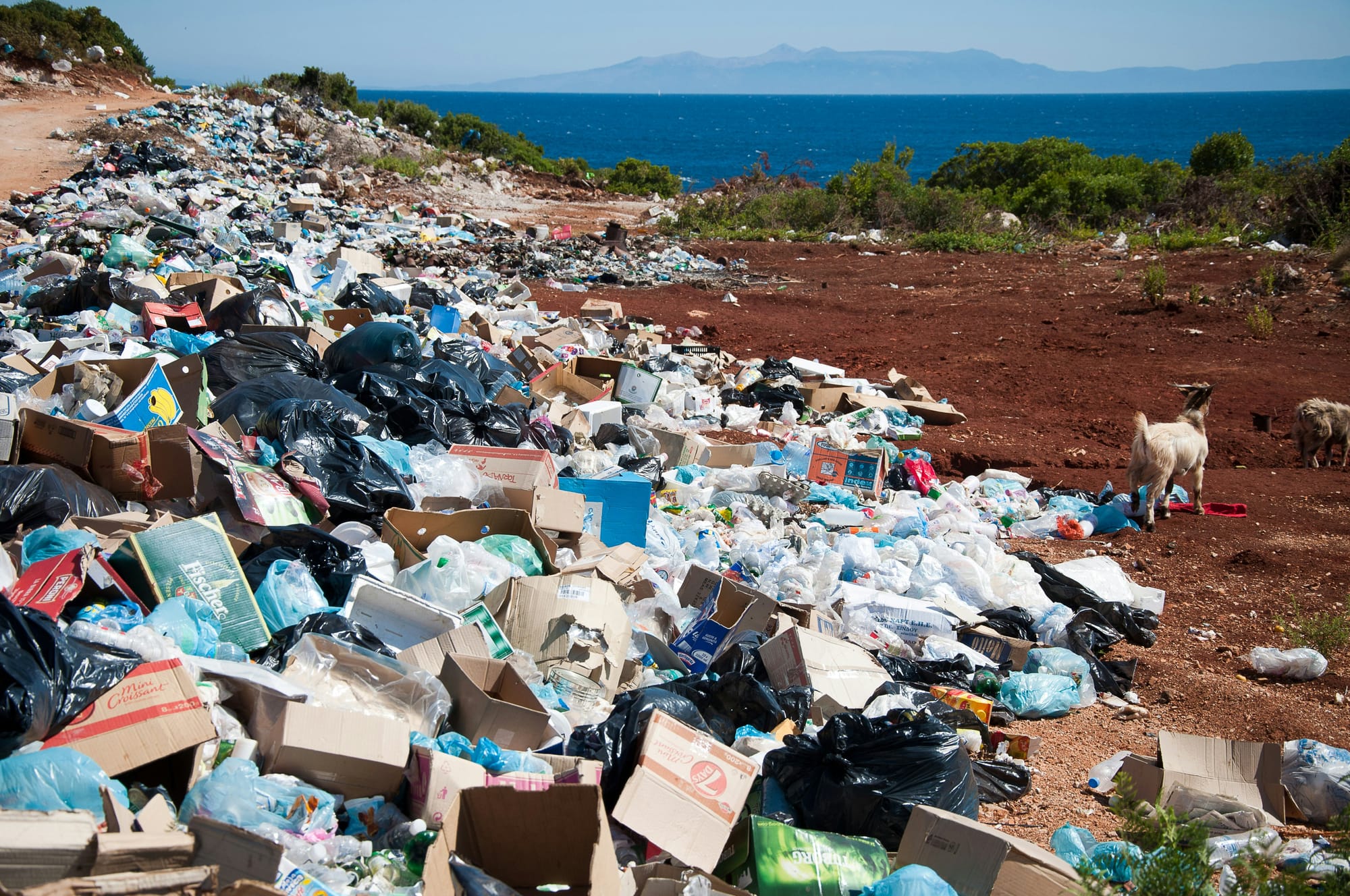
Our choices of what and how much to buy have also major impacts on others, positive and negative. Collectively, our vast accumulation and tossing degrade the environment (plastic pollution, enormous landfills, global warming, resource depletion). But consuming Stuff creates work for people who make, ship, and sell the Stuff, so some impacts of possession are positive, too—its ultimate impact is complicated and contentious, and there are lots of ways to look at it.
One way to look at accumulating Stuff is to consider the opportunity cost of spending money or time to acquire it vs doing something else with the money or time. Philosopher Peter Singer takes the perspective that we can almost always do something more worthwhile with our resources than accumulate more possessions—or spend money on anything unnecessary, for that matter. For example, say you spend $10 on a grande coffee and a biscotti. You certainly didn’t need that treat. Instead, you could have spent the money to treat or prevent schistosomiasis in 25 kids in sub-Saharan Africa. With the $128 I spent on four sweatshirts for our grandkids, I could have bought 457 meals for schoolkids in Kenya. (These figures are according to the impact calculator at the effective altruism site The Life You Can Save.)
So, presents?
However you look at it, it’s worth thinking about how accumulating Stuff affects others—and yourself. But to bring the thoughts back to grandparenting, one final thing I’m considering as we choose what to add to the sweatshirt offering: What message do our gifts give our grandchildren? What do our choices say to them about what is valuable? What do the presents say about how we feel about them, and about others? What are we signaling about sharing?
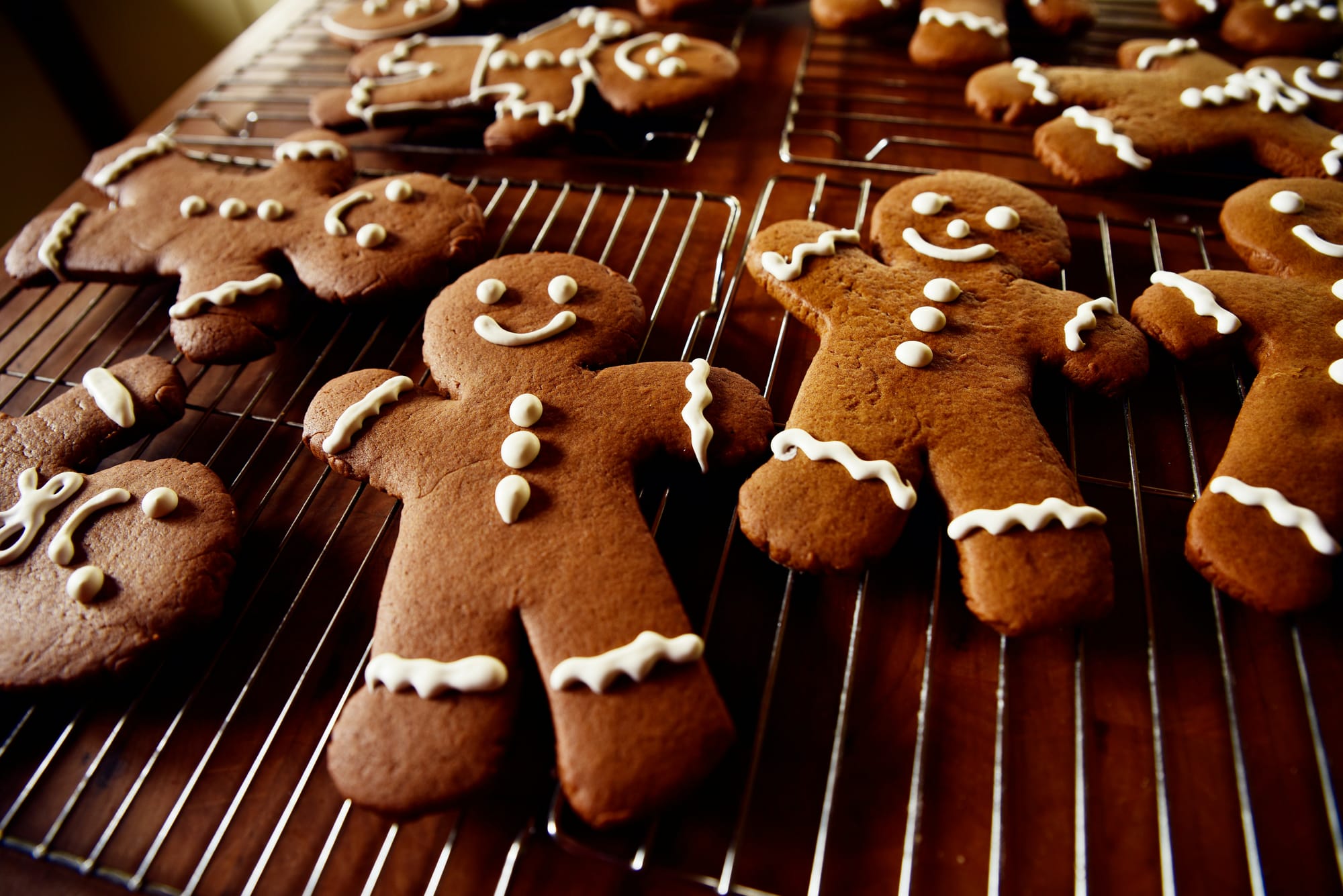
For better or worse, all this is the kind of thing that goes through my mind when choosing presents! Luckily for the grandchildren, few of my conclusions come down to hard oughts. I’m even willing to get a bit of throw-away Stuff for the sake of some jollity. But for me, and it turns out for the rest of the family, too, the upshot does tend toward de-emphasizing Stuff around the holidays and emphasizing time and shared experiences—music, games, food, and cooking. All while dressed in those warm sweatshirts!