It's summer—get wet!
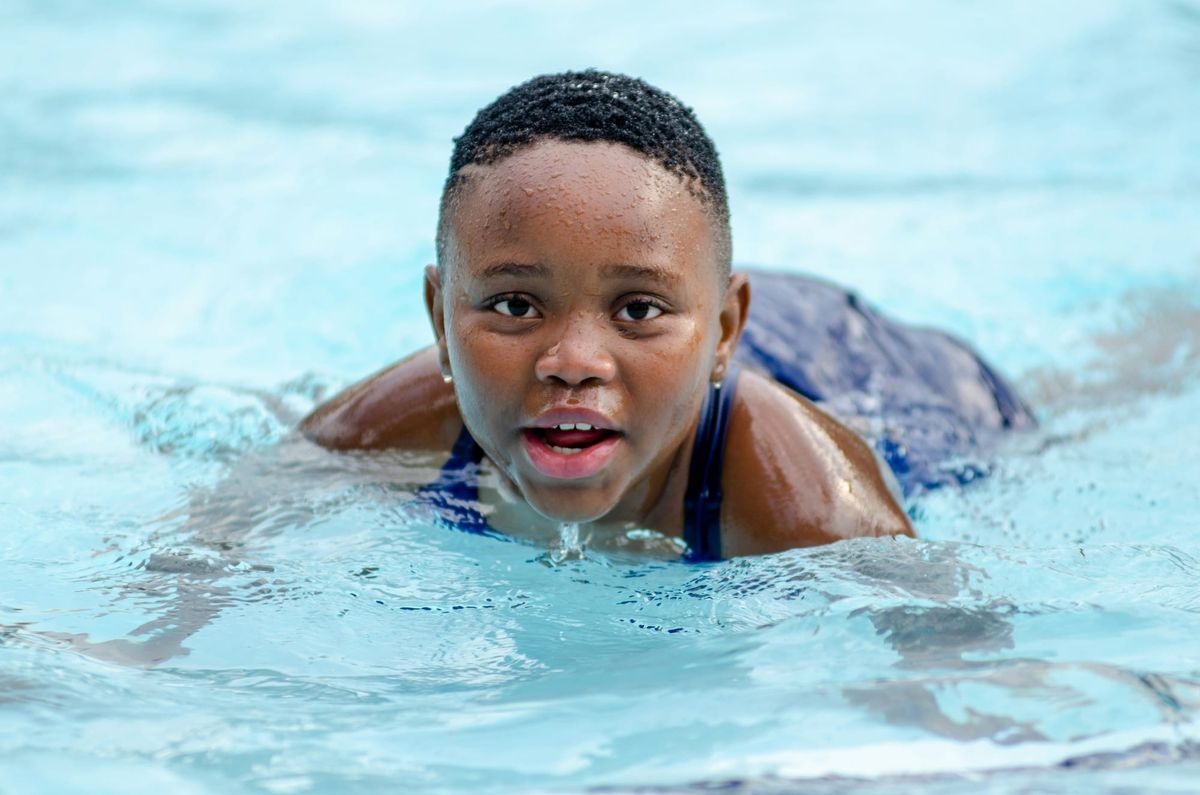
After I wrote this post, I checked on public wading-pool availability for readers not in the Twin Cities. Turns out that Minneapolis is nearly unique in having so many wonderful wading pools available. Hopefully you can adapt my suggestions to the options available in your area...while pondering the equity issues that have most pools private and vanishingly few options available for those who can’t afford a pool or a membership.
Hot summer days with baby or young kids means time at the wading pool! Grandkids who are older and competent swimmers will prefer a deep-water option, but for the littles who aren’t yet strong swimmers, a wading pool offers a huge amount of fun, a way to stay cool, and is less stressful for the caregiver. Here are a few tips from my wading pool experience over the years, in case you’re rusty on the preparations and the fun.
First things first
Consider whether a wading-pool visit is wise. One adult can only safely manage one non-swimmer, even in a wading pool. (In a wading pool context, a “swimmer” should be able to easily go under water and get themselves back up, and/or be tall enough to keep themselves from going under water.) If, say, you have a couple non-swimming grandkids, a sprinkler in the yard or a neighborhood splash pad is a safer, more relaxing way to get them in the water.
Then there is your energy. Preparations, lugging gear, and keeping an eye on the kids does take effort. Hopefully, your grandkids can help with all this…in any case, gauge your stamina.
Also, do you have the stuff you need? See below…
Before you go
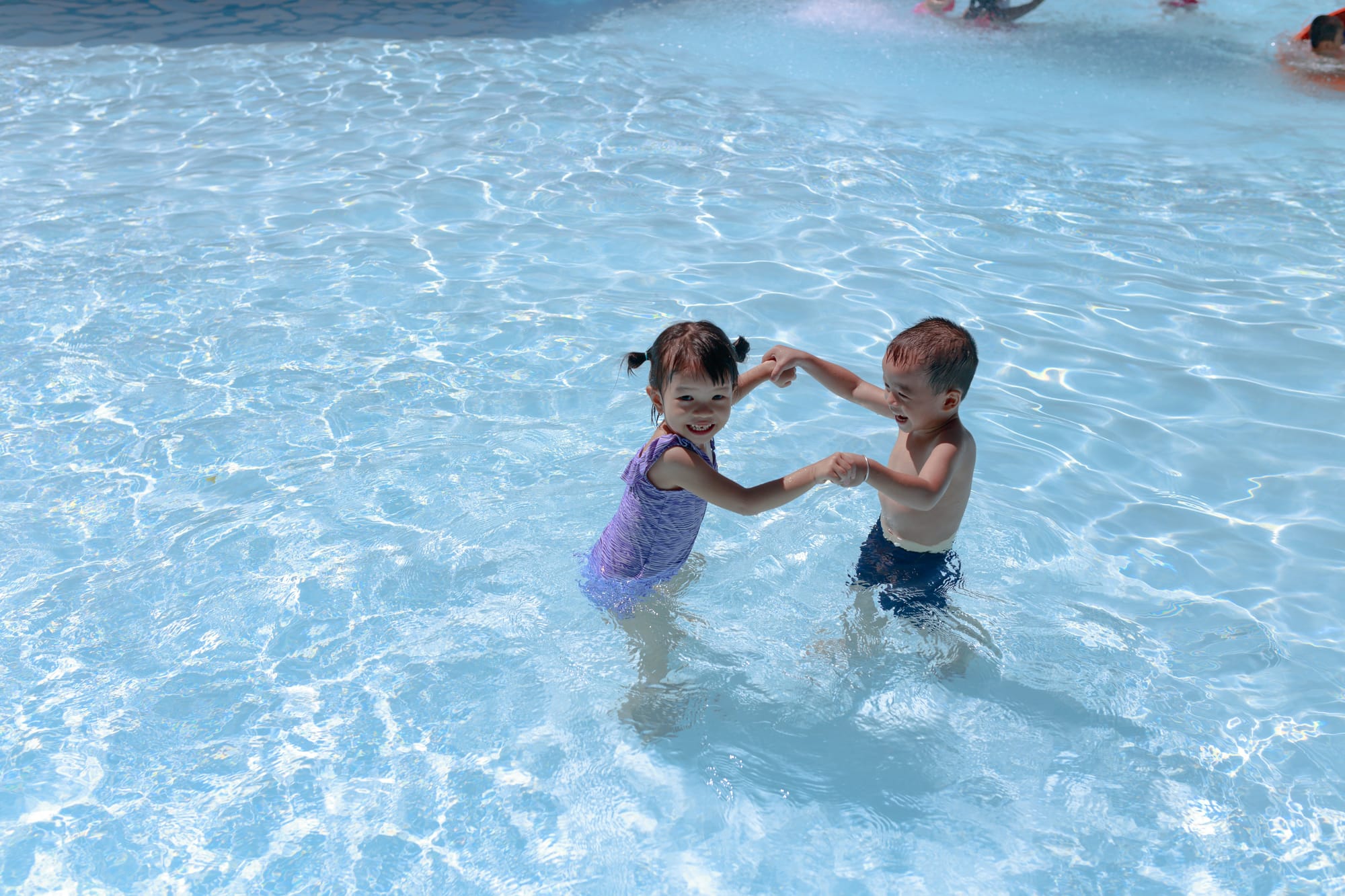
• Eat snacks, drink water. Use the bathroom. Change into swim gear. Apply sunscreen.
• Assemble and pack or wear everything on the basic checklist: Sunscreen; swim gear that preferably includes a swim shirt, and for babies or pre-toilet-training toddlers, a disposable or reuseable swim diaper; sun hat for babies; goggles if the kids like swimming under water; towels; a bag to carry wet stuff; drinking water in non-breakable containers; snacks (pay attention to the pool rules about food); and toys (see below).
Don’t forget yourself! Especially sunscreen, hat, water, and snacks. I recommend wearing something you won’t mind getting wet. This suggestion is especially important if you’re going with a baby, because you’ll need to be in the water or sitting on the edge with them. Even if you are there with older kids, you are very likely to get splashed, especially if you choose to play with the grandkids in the water, or even from the edge.
• And oh yeah, that other checklist: Keys, wallet, phone, glasses…
Good grief. Why is going out the door so complicated?
As you arrive
• Read the pool rules with the grandchildren. Doing this makes enforcing the rules a shared activity in service of “The Rules,” rather than some annoying restriction Grandma or Grandpa cooked up. If the rules aren’t posted, or if you need some extra or different expectation about behavior, review and set that expectation before going beyond the pool entrance.
While there
• Avoid distractions! Do not look at your phone while the kids are in the water. Stash it in a swim bag or wherever, maybe in a waterproof container. But that glance away is just when baby topples over or toddler slips and conks his head…and you’ll be AWOL. If knowing the time is critical, wear a watch. Or ask someone else. Also, chatting with others at the pool is a lot of fun, but do it with limited eye contact—eyes need to be on the swimming kiddo(s).
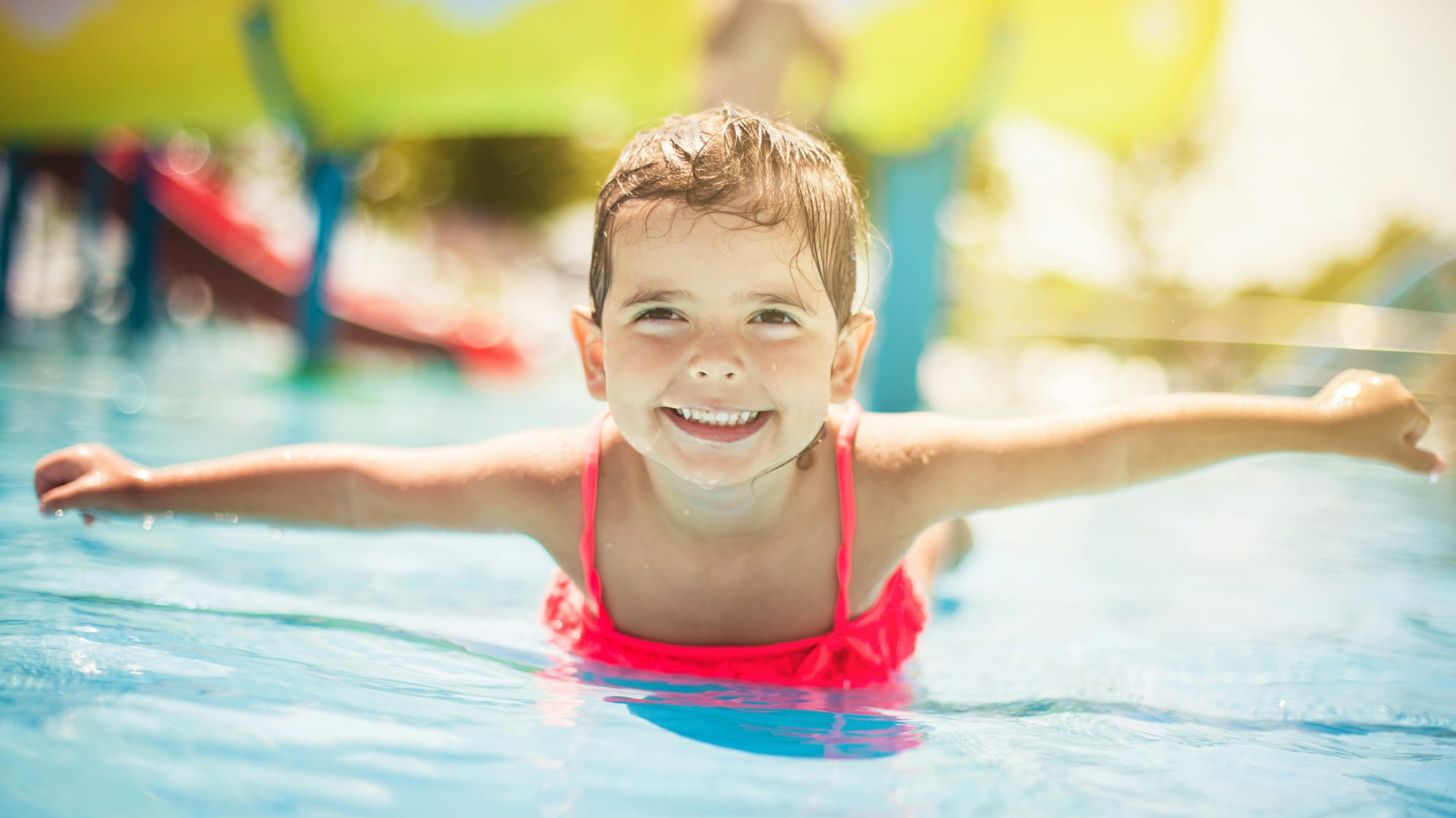
• As needed, help kids get used to the water. One grandson and I sat with our feet in the water playing with toys at the pools edge for several visits before moving onto holding hands in the water, sitting in the water, and finally independence. He was so proud when he could finally lie down in the shallow water and scoot himself along with his hands, feet floating behind! Babies also typically need a gradual introduction, especially if the water is on the cold side.
• Stay cool: It can be surprisingly hot at the pool if you’re not actually swimming. To stay cool but mostly dry, put your feet, and now and again your wrists, in the water. A kid who’s not swimming could overheat, too, so keep alert to that possibility as needed.
• Stay warm: Babies and some kids get cold swimming even if they are active, and they may not notice. Caregivers need to watch for cold hands or change in lip color—to blue-ish in white kids or to white-ish or gray-ish in dark-skinned kids. Kids can usually warm up in a few minutes if they get out and do some jumping jacks or similar, or if they lie in the sun on a bench or on their towel for a bit. If they don’t warm up easily, call it a day.
• Toys: Great pool toys offer physical and creative fun, are shareable, and minimize the odds of conflict or injury. Great options include pool noodles; sponge-type balls or beach balls; and boats, diving toys, or water-exploration toys like water wheels or funnels that the kids aren’t too attached to. OK options include single-person toys that the kids are very attached to (see “sharing toys” below), and reusable water balloons (which are lots of fun, but the sudden splash of water is not enjoyed by all). Please don’t bring squirt devices of any sort, hard balls, or easily breakable items.
• Sharing toys: Because toys float around in the pool and the toys’ owners periodically lose interest in them, there’s often an opportunity to borrow a toy—or share your toy with someone else. Some kids are totally OK with this give-and-take, others not so much. You’ll have to play it by ear with your grandkids, showing them how to practice some social skills. (For those who struggle with sharing, see “use a timer,” below.)
• Use a timer: Timers are very useful at the pool for regulating sharing (one kids gets 5 minutes with the floaty, the next gets 5 minutes), and for counting down to time to leave. But the timer is probably on your phone (see above re don’t look at your phone). I’ll let you work out whether it’s worth very briefly taking your eyes off the kids to set the timer. With a couple 4 year olds, probably. NOT if you are watching a baby.
• Gauge the length of your stay: Weather, mood, time of day, age of the kid(s), friends at the pool or not, pick-up time, adult stamina—lots of factors influence how long a pool trip should be. Given all that, flexibility on timing is the best strategy.
• Take a break. If you stay at the pool for an extended period, the kids may need a break. A break can help disrupt a bad cycle of toy hoarding, calm a child who is upset, or help a child warm up. Let the break feature water, snack, or bathroom time as needed.
Top tip last!
Watch and laugh! Your grandkids will be thrilled to show you their latest trick, and you’ll get a chance to see their water skills, their interactions with other kids and adults, and their delight in splashing their way through a summer day.