Making music with Baby
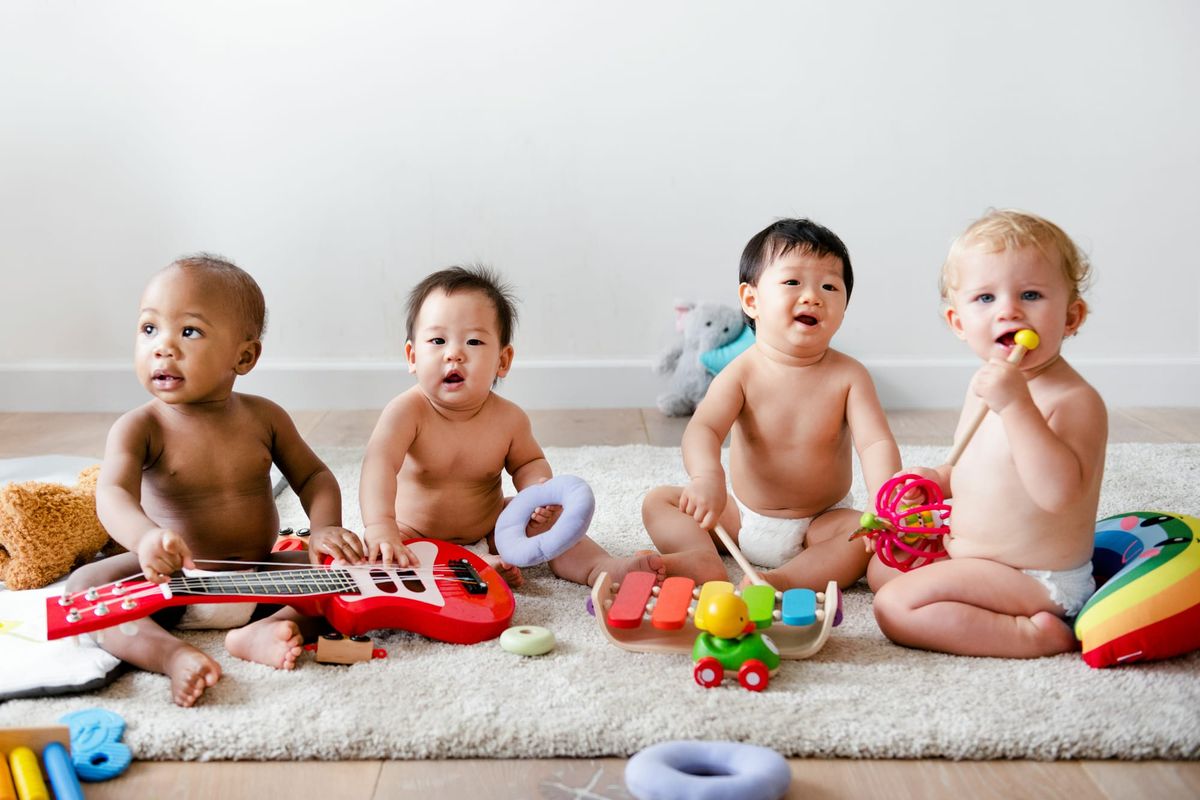
Baby Granddaughter dances for two reasons: excitement about food, and music—just about any music. Now turning one, she also imitates sounds—a buzzing toy, tornado sirens, grown-up laughter—and she loves to make new noises with shakers, pots and pans, or banging on the table. With the exception of her food dance, all these show that she’s developing an aptitude for music. Your young grandchildren are probably similarly inclined. Their natural bent and enthusiasm gives an opening to help their musical proclivity along—not in a fraught attempt to create prodigies, but to encourage a lifetime of musical enjoyment and have fun in the process.
You can encourage GrandBaby’s musical appreciation and abilities even if you aren’t musically inclined. I’ll start with ideas for that group, then I’ll suggest a few slightly more advanced activities for those who feel more confident in their musical abilities.
If you aren’t a confident musician
To introduce music to grandbabies, keep in mind four basic musical properties: rhythm, pitch (how high or low the notes are), timbre (sound quality, like harsh, pure, buzzy, etc.), and volume. Some music-related activities practice all four, some focus on one or two.
Imitating sounds is one activity that can tune into all four. The trick here is to pay attention to what Baby is doing already, so that you can respond and build on that. Starting very young, babies take steps toward language that are also steps toward musicality. They begin to keep up a “conversation,” taking turns with an adult making first vowels sounds (oo, ah), then adding consonants (ma, da, ga), tongue clicking, lip buzzing, and finally words. They learn to whisper and yell. All that change varies the timbre and volume of what they say, and you can copy back what they say as a fun game. Or you can start the “conversation” to see if Baby will copy you. You can also add a rhythmic pattern to what you say—not just “ooo” but “oo/oo/oo” to see if Baby can pick up on the rhythm. You can add pitch to the imitation game, too—slide that “oo” to high pitch or low pitch, for example. The back-and-forth between you is probably reward enough for Baby, but a little extra enthusiasm for their responsiveness can’t hurt!
Introducing rhythm is easy and fun. Plus, by showing babies lots of different ways to make rhythm, you also let them hear a wide range of pitches and timbres. Some ideas:
· Tap or pound out a rhythm on a table or any surface you’re near. Or clap or do other body percussion (puffed cheeks and tummies make fun noises). By age one, maybe Baby can copy what you do—or approximate it with their own tapping or pounding.
· Use shakers or rattles to beat out a rhythm. Try varying the rhythm and emphasis: 1,2,3, 4 or ONE, 2,3 or slow fast slow fast or…etc. If Baby just wants to shake the rattles, that’s fine, too.
· Make instruments—just be sure they are babyproof (most of the instruments at the link are not!!). Homemade basic rattles are good (From “Baby Toys that Don’t Break the Bank”: “…an empty plastic ketchup or salad dressing bottle with a tight screw-top lid, plus a bit of dry rice or a few dry beans, and you’ve got it.”
· Use household objects for percussion play: pots, metal bowls, pan lids, potato mashers, or quieter items—even a sofa makes a noise when hit. But keep Baby’s safety in mind!! For example, older kids enjoy using a long spoon as a drumstick, but a baby could easily poke an eye with such a thing.
Playing music for Baby on your listening devices(s) can introduce them to lots of musical possibilities. Keep the volume low to moderate, as baby’s ears are sensitive. Children’s songs (check out Woody Guthrie’s music for children, such as here and here: so simple and so well targeted to littles) and other music especially written for children are great. But Baby probably will like grown-up music, too. Consider branching out to genres beyond your favorites, and to music from around the world. It’s fun to see what Baby responds to!
Baby or baby/toddler music classes are a fun activity to share with GrandBaby. In my experience, the leaders at such classes work to make folks who aren’t musically inclined feel comfortable. GrandBaby and I go to a free story hour at our local library that also involves a lot of singing games. The price is right (that and the location and the timing)! But the paid options typically upgrade the quality of the music education by providing a wider range of materials, more variety, and more practiced teaching and singing. Worth it? Depends…
If music is in your blood
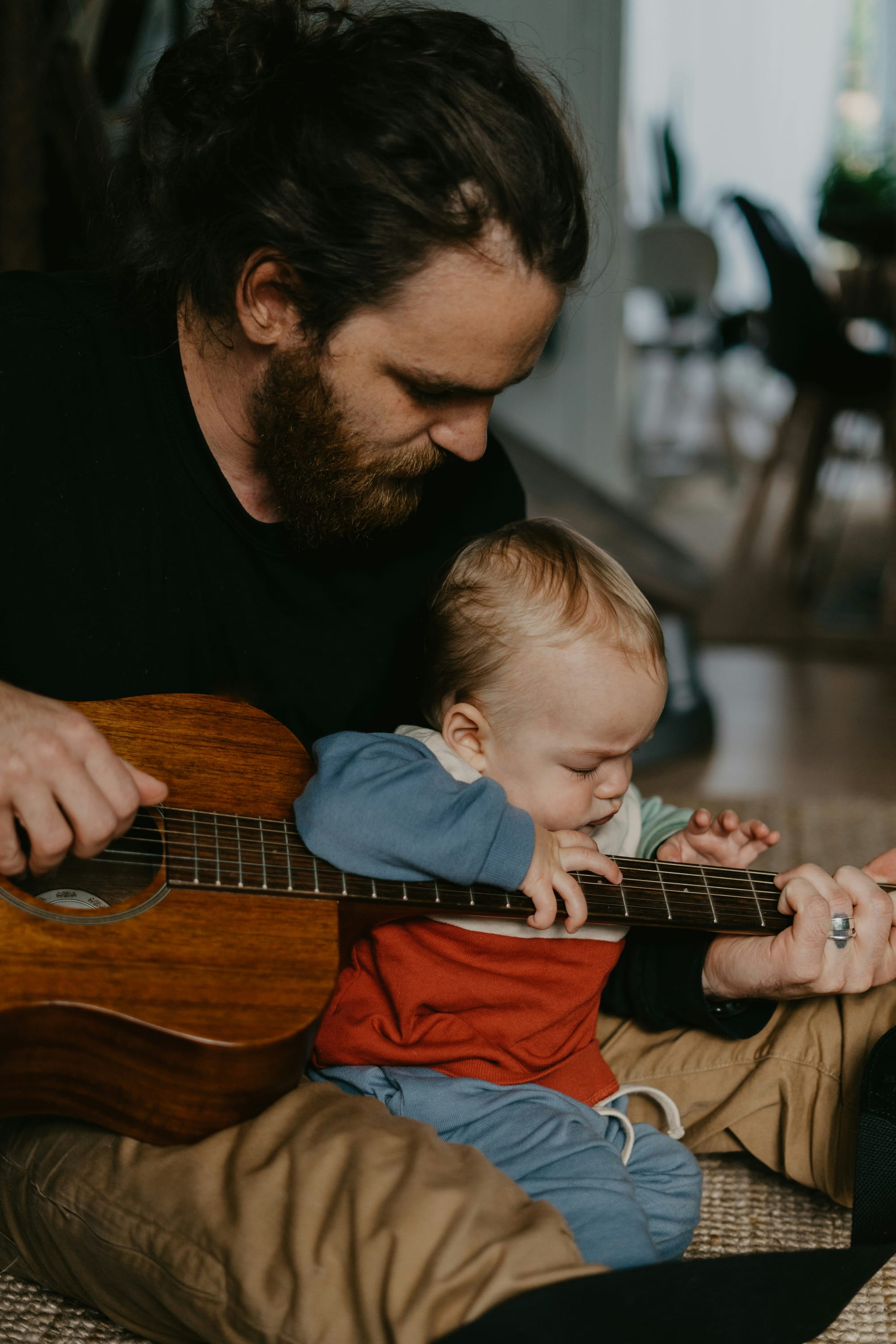
The ideas above can all be part of the repertoire for musically-inclined grandparents, too. But for those who can do it, singing to and with Baby is the number one music-learning activity. Babies love the sound of your voice, the vibrations of the singing if you’re holding them close, the eye contact and activity if you’re singing a song with hand motions. GrandBaby and I have a few songs that we sing on repeat, adding new ones as we go. Soon she’ll be singing along.
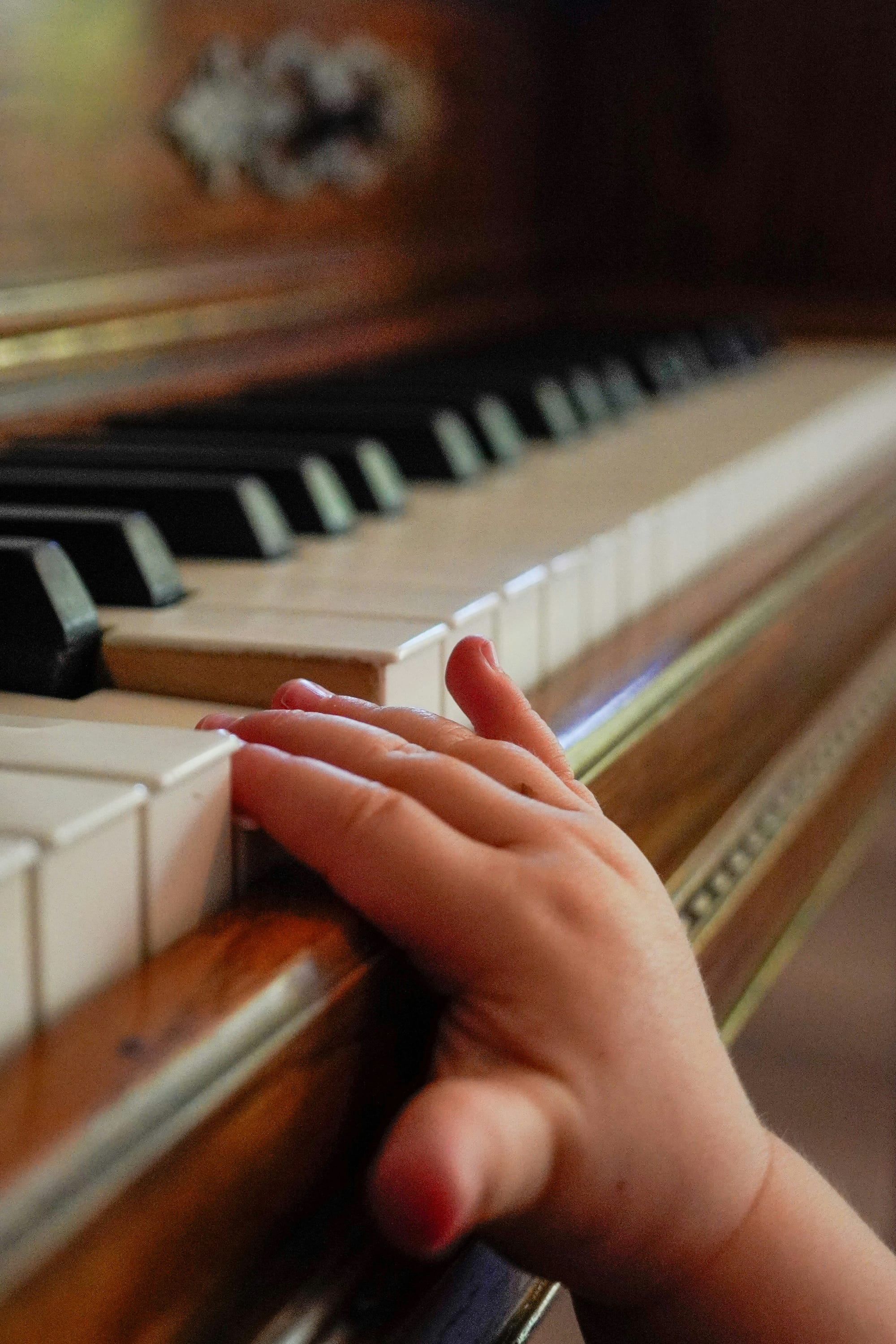
If you have a musical instrument that’s sturdy enough, let Baby try it. We have a piano keyboard GrandBaby loves to pound away on. Sometimes she’ll let me play a song or two, too.
Building on rhythm play and singing, you can use games and play to introduce other musical concepts, such as loud and soft, fast and slow, high and low. You can also see if Baby can match pitch while you’re imitating each other’s sounds. One website suggested doing this starting with F above middle C, because that note is typically easily in range for babies. (And if you care about cultivating good intonation, you might want to use standard pitches in any case.) I haven’t done enough research to know whether the refinements of pitch matching make any difference to later ability. Does sound like a fun experiment, though: I haven’t tried it yet with GrandBaby!
For everyone
For the vast majority of us, the best approach to music is fun and lifetime enjoyment, not stressful performance goals. SO: Don’t correct Baby’s singing or rhythms or anything else. Do musical activities when it comes naturally, not as a formal practice session. And if Baby dances, dance along.