Time flies—and sings

After a certain age, you can’t help thinking about time—how much has passed, how much you have left, how fast it is going, how much you have missed along the way, how to live it well. One of my preoccupations is that although raising our children was a highlight of my life, I remember shockingly little detail. Over roughly 20,000 days of childrearing (365 days/year x 18 years/child x 3 children), how many days do I remember? How many conversations, events, outfits, meals, successes, struggles? Some important or repeating ones, of course, and the ones we have photos of, but nothing like 20,000. Most human memories aren’t that great, but still! What was I doing? Was I not there? And I wonder whether I’ll do any better remembering times with our grandchildren.
“Not there” is at first glance an easy answer, in the sense that I might well have been distracted or busy or preoccupied a lot of the time: Being present in the moment can be hard. And being present in the moment is one of the keys to later remembering.
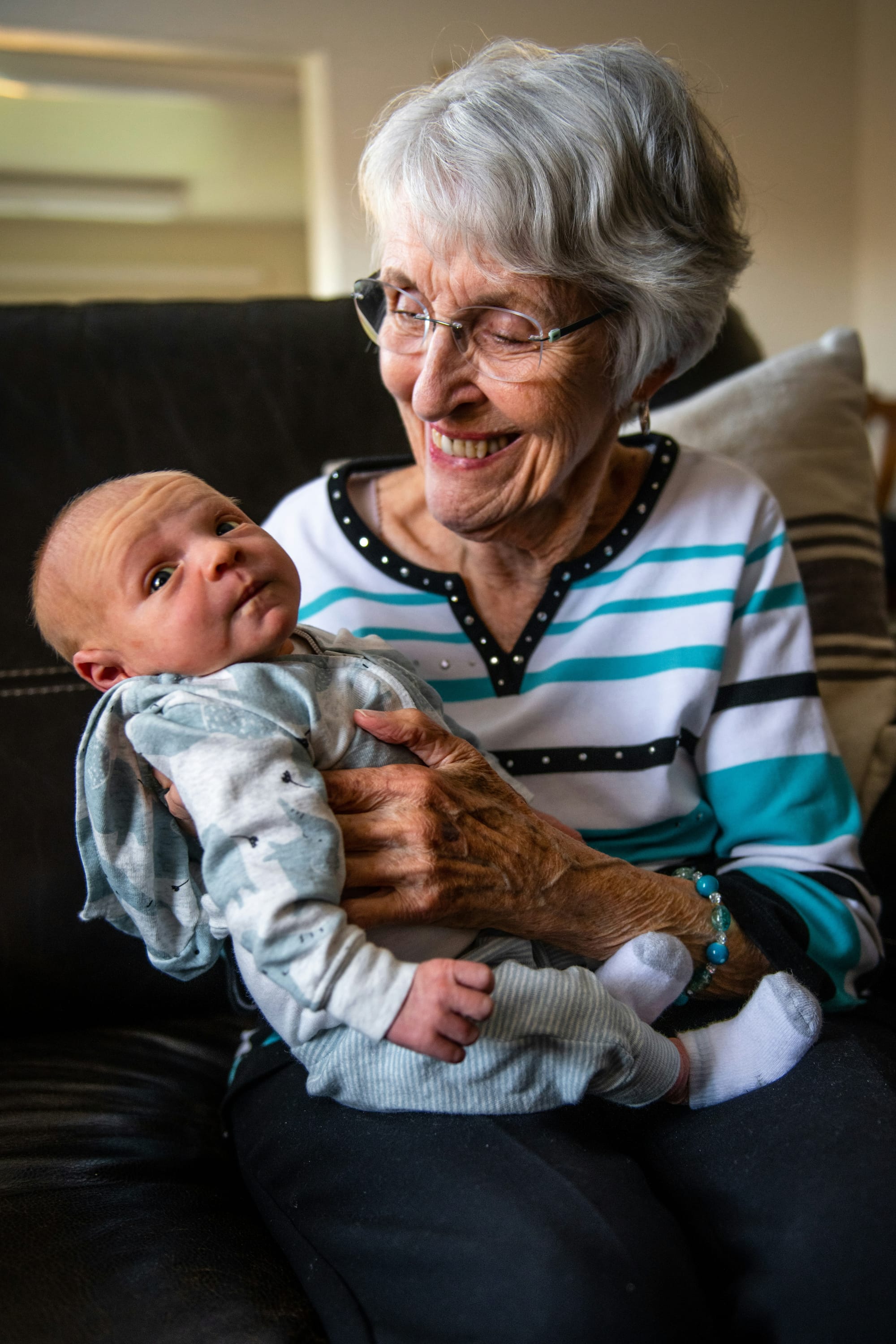
Three places at once?
Yet as a practical matter, we need to live in three places (metaphorically speaking): Past, present, and future. For instance, our relationships with our grandchildren encompass all three. We care for and play with them in the present. Along with their parents, we pour our hopes and plans for the future into them. And we build on the past, wanting to hand down traditions, morals, and wisdom from our own pasts or more ancient ones.
However, we can’t attend to three places at once. And figuring out where our attention belongs isn’t easy. Live too much in the present, and you’ll be like grasshopper in the Aesop’s fable, failing to plan for winter, and failing to learn from the ants’ example. Live too little in the present, and you’ll miss connections with people and things around you—indeed, you’ll miss out on your life.
Live too much in the past, and you’ll miss joys in the present and opportunities for the future. Live too little in the past, and you won’t see patterns in your own life—or in broader history—that can inform imagination of the future and choices in the present.
Living too much in the future also shortchanges the present, with the additional drawback that the future is uncertain, so your attention, and maybe your heart, is set on a world that may never exist. But living too little in the future is just what grasshopper does in that fable—ignoring it leads to a failure to plan, or to imagine alternatives to your present so that you can take steps towards a goal.
The country’s current mood isn’t helping. We are in a backward-looking moment—and not necessarily a historically accurate one. MAGA and MAHA purport to be returning us to times of previous greatness and healthiness. Liberals and progressives are yearning for the glory days a year ago (!) when much of the country (not everyone) benefitted from scientific innovation, rule of law, affordable health care, progress toward clean energy, etc. The present, meanwhile, presents a daily new chaos, making it hard to stay focused there. And the future? I get the sense that we’re all, whatever our politics, covering our eyes and sneaking peeks when we dare—putting much stock in planning seems to be out the window, given various upheavals.
Nor does it help that it’s easier than ever to step out of any considered engagement with past, present, or future by distracting ourselves. To classics like drinking, drugs, and television, we’ve added doom scrolling, endless social media, and games on our devices. Distractions happen in the present, but we allow them without clear intention or attention. They can be enjoyable, but their big negatives are that they are unfulfilling, make no contribution to the common good, and are often addictive (that’s why they are “distractions” and not “activities”).
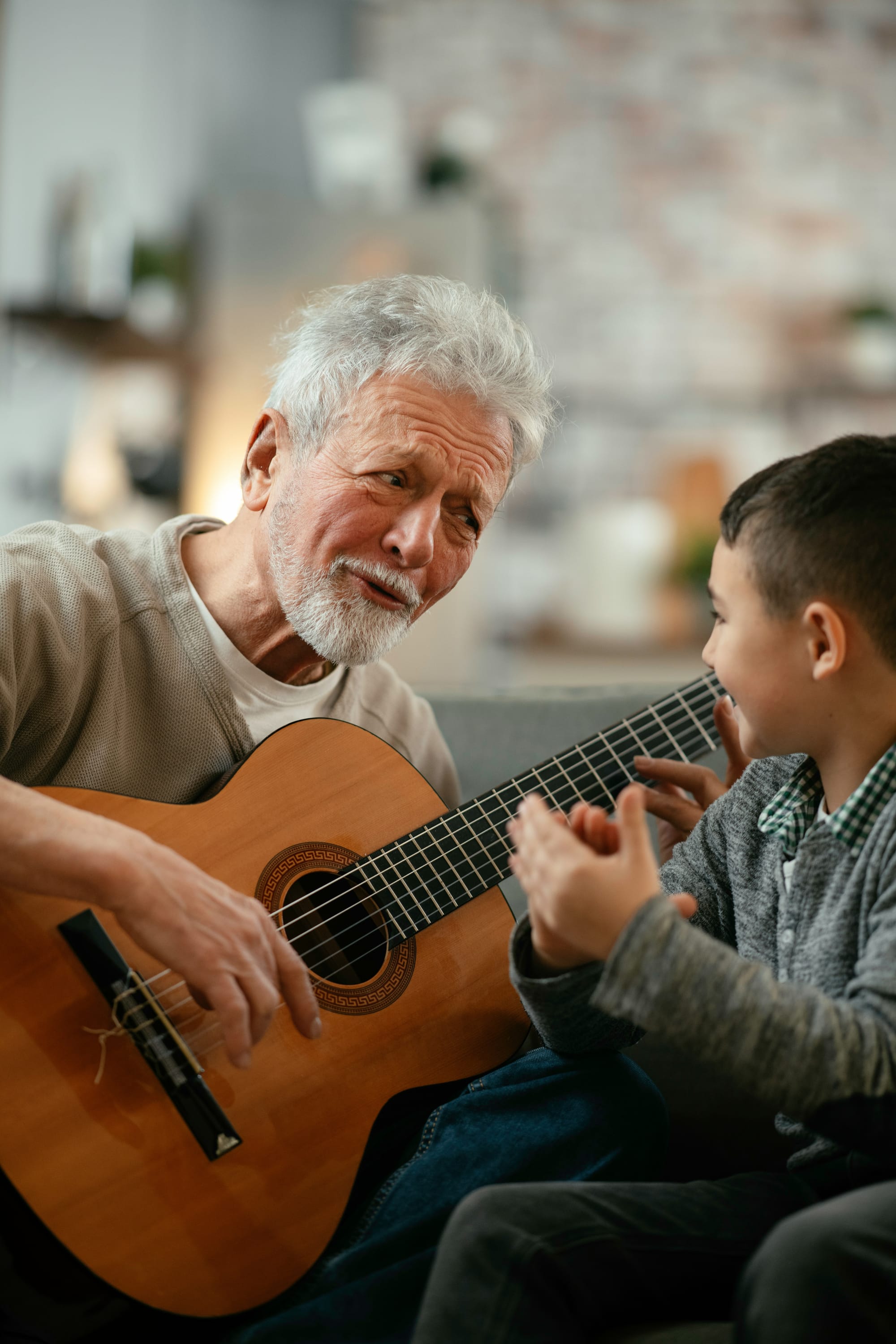
Time as music
Present difficulties or no, it’s nothing new to try to make sense of time and our relationship to it, as common metaphors attest: Time’s like a flowing river—the water flows by but the river remains; it’s like a great wheel—the seasons, the movements of the moon and stars, breath and renewal, all are cyclic; it’s like a film—it progresses frame by frame, a series of present-time snapshots we tie together with memory and projection. And my favorite, it’s like music—sustained notes or shorter ones, in a chorus that started long ago and that is rich with overtones and resonances that linger into the future.
What time really is (if anything!) apart from metaphor and human tinkering is a separate question, and super, super complicated. One message clear enough from even cursory reading is that our modern-day, clock- and calendar-governed experience of time, through which we understand time to be orderly, constant, and unidirectional, is almost undoubtedly wrong.
I have no idea what that realization should mean to me. I mean, should I be terrified? Thrilled? Despairing? Should I ignore it? No clue. So I choose to take it as freeing—my experience with time is perfectly valid as far as it goes—as long as I realize that isn’t very far, since it may not reflect your experience, or be consistent with time’s actual attributes.
So I’m adopting the time-as-music metaphor, as I find it very helpful for understanding how the tune that is our own life begins, ends, and resonates with others—indeed, with all creation, albeit in a very minor way. The sounds we hear (again, metaphorically speaking) are necessarily in the present. But to perceive the notes as part of a melody or composition, we need to remember what came before. And we need to know that whatever notes we produce now will resonate into the future—and sometimes the tune of the future is predictable, sometimes not. In other words, wherever we are attending is part of the composition, and all of the composition is important to the whole. But you can’t neglect any part of it—particularly the present, where your contribution joins the past, is making a difference to the future, and is where your appreciation of the music happens.
Picturing time this way helps me a little with my distress at my poor memory. Whatever I did back then, it’s echoing. And I can choose now, with the grandchildren, to amplify the notes that seem most essential right now.
So let’s go make music, listening with the ears of our hearts.