Getting Grandbaby outside—safely!
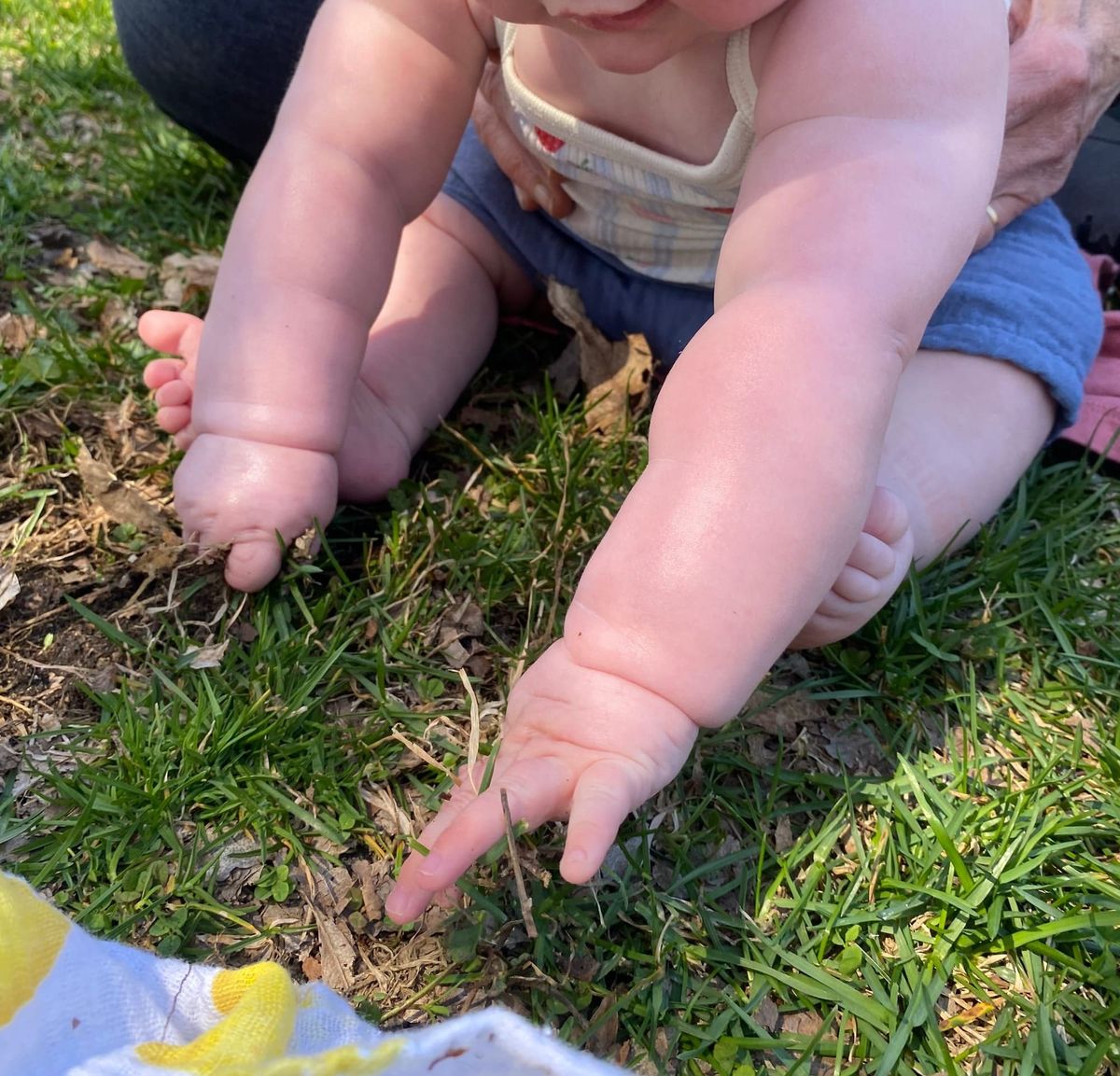
New Grandbaby’s first spring! From her stroller or a swing at the park, she absorbs the budding trees, the breeze, and the warm sun. From a park bench, she closely follows the older kids’ play. To six-month-old Grandbaby, each wood chip under the play equipment is uniquely intriguing. Great practice and fun for grasping and dropping, too. Sitting in the lawn (with some propping by Grandma), she excitedly discovers that she can pull grass up by the roots, exposing delightfully sticky mud.
Older and younger babies of course explore differently. Much younger, and the exploration will seem passive, but they’ll appreciate colors, smells, and your patter about what they are watching. A little older, and they’ll crawl toward what they want to investigate, or play in sand or water. A bit older still, and they’ll be pulling up and climbing.
Amidst all the excitement, however, outdoor ventures require the caregiver’s absolute attention on Baby and on safety. Here are four nonexhaustive (!) categories to attend to:

• Watch for hunger, thirst, overheating or chill, or fatigue. Outings will go best if Baby stays on an even keel. It’s up to the caregiver to “diagnose” agitation, fussiness, flushing, or other signs that Baby needs you to address a physical need.
• Nothing in the mouth. Choking, poison plants…need I say more? Many babies are so prone to put objects in their mouth that it limits what you can do with them. For example, one grandson couldn’t be set down on the beach because he would endlessly pop pebbles in his mouth. Other babies, you might just need to keep an eye on them. (So far, that’s what it’s like with current Grandbaby.)
• Sun protection. Babies under six months should be kept out of direct sunlight as much as possible, and older babies should be mostly protected. You can use various lines of defense: Shade—as from stroller sunshades, trees, or umbrellas; timing outdoor play to early morning or late afternoon; clothing—sun hat, clothing with a tight weave, sunglasses; and sunscreen. There’s some disagreement about sunscreen use: As of 5/9/24, the Food and Drug Administration says not to use sunscreen on babies under 6 months, but as of 4/13/26, the American Academy of Pediatrics (AAP), via its patient-oriented website, says to use it for babies aged 2-6 months on exposed body parts only, preferably (but not exclusively) with a mineral sunscreen. After 6 months, the AAP says, any sunscreen except those containing oxybenzone can be used over the whole body. Any sunscreen should be the broad spectrum variety, SPF 30 or more. And you don’t want babies eating it or getting it in their eyes, so not on the hands or too close to the eyes. Watch for sensitivity to particular sunscreens, too: You might need to change brands.
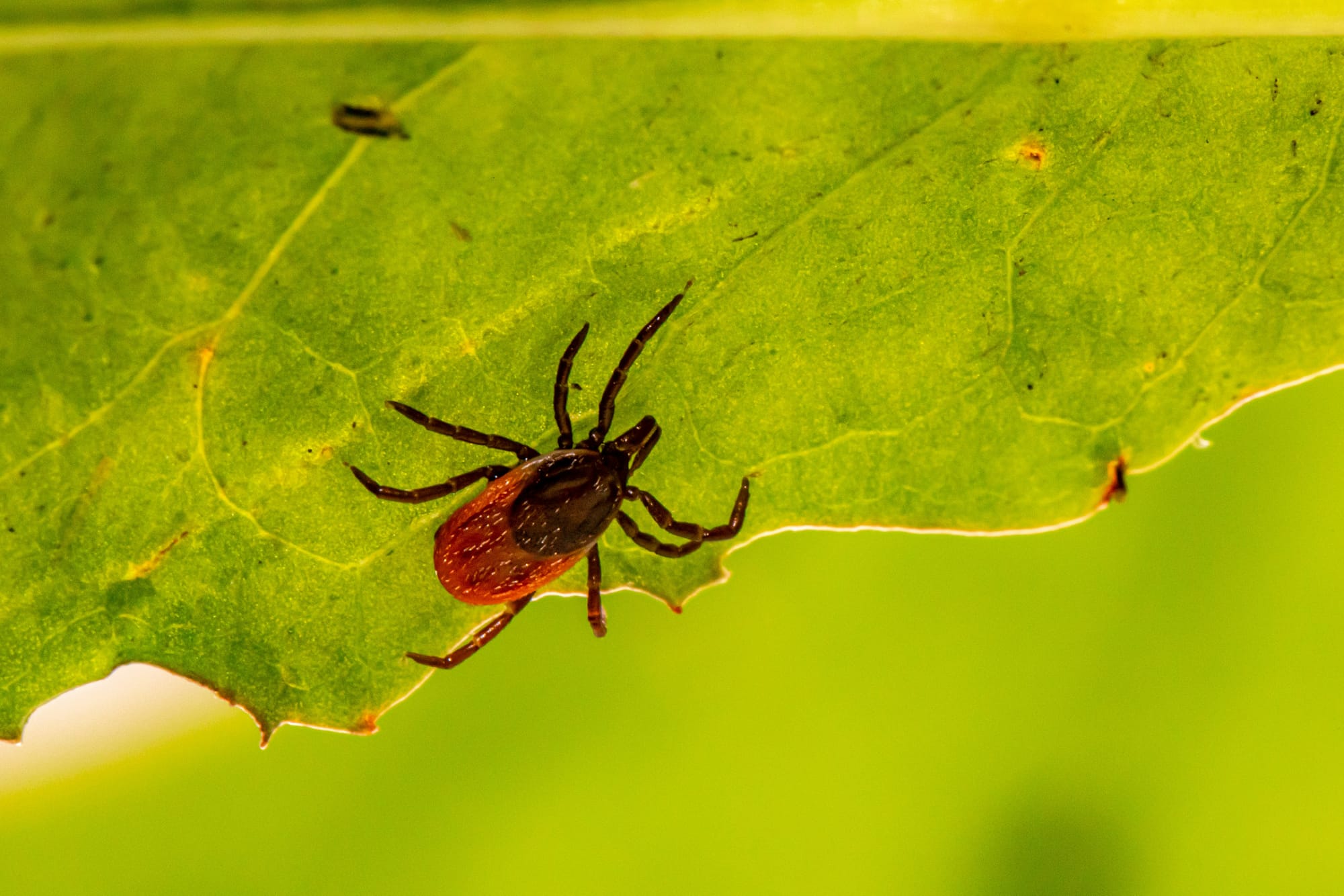
• Avoid biting bugs. Ticks are more prevalent than usual this spring (2026), and of course they transmit a number of diseases, Lyme disease being the most prevalent. Mosquitoes will be arriving soon, and some of them transmit disease in addition to leaving itchy welts. (And then there are gnats, biting flies, bees…)
Some prevention is easy enough: To avoid mosquitoes, keep Baby away from brush and deep shade, and go inside before sunset. Clothing can protect the covered areas, especially if it fits loosely and has a tight weave, and netting on their stroller or other carrier can be very protective.
To avoid ticks, remember that ticks can get from caregiver or pets to Baby, as well as finding Baby directly, so anti-tick measures for all in the family are helpful. All can avoid long grass and brush, and humans can dress in light-colored clothes (so they don’t mimic a shadow). Keep socks pulled up over long pants, and do careful tick checks. For Baby, diaper change time is a great opportunity: Don’t forget all those cute folds on arms, legs, and belly button, and remember that deer tick nymphs can spread disease and are only the size of a poppy seed. If baby is in your care, don’t wait for the parents to do it—there’s a blessedly rare but potentially fatal virus, Powassan virus, that can be transmitted from tick to person in as little as 15 minutes after a bite! Also, use good technique to remove ticks: Poor technique can squeeze the tick’s germ-laden stomach contents into the bite wound.
But those of us who live in mosquito or tick havens know that the bugs don’t fully respect behavior or clothing boundaries, even when you’re careful. We visited a woodsy wildflower garden that has wide, wood-chip paths, and Baby was in a front-pack carrier. But she grabbed a branch and thoroughly enjoyed the effect of shaking the whole bush, potentially giving an opportunistic tick (aren’t they all?) time to sneak up her arm.
So many of us resort to chemicals. Sadly, no available chemical deterrent is fully benign, especially for babies. Notably, “natural” or “plant derived” doesn’t necessarily mean safe. The Centers for Disease Control (9/8/24) and AAP (6/21/24) both say NOT to use plant-derived oil of lemon eucalyptus on children under age three, as it has not been well-tested in this age group. Essential oils don't work well and are also suspect health-wise, according to Consumer Reports (9/17/23), because they can cause allergic reactions or sun sensitivity. DEET-containing products get the nod for babies older than two months when used sparingly, at low concentrations, and only when needed (although the Environmental Working Group (EWG) says to wait until age six months). Just a touch of 10% DEET-containing repellent should last a couple hours, for example. At most, use products containing 25%-30% DEET: Higher concentrations don't improve protection and do increase exposure risk. Anecdotally, as someone who walks buggy portages from time to time, I find that spraying clothing is almost as effective as having the stuff on my skin. However, don't use sprays for babies or young kids, because they can’t be appropriately wary of inhaling the fumes. Also, DEET mustn’t be applied to clothing or body parts they will put in their mouths.
Picaridin-containing repellents are also effective and considered safe for babies over two months; the EWG says picaridin is less likely than DEET to cause skin irritation. Precautions on concentration, application, and using only when needed are similar to those for DEET.
What about avoiding any skin-applied repellents by using the insecticide permethrin on Baby’s clothing and gear instead? Permethrin is not an option for Baby, despite its being recommended for adults and older children. It’s an endocrine disruptor, so it should not be ingested (or released into the environment), and babies chew on things, including clothing and gear.
Unfortunately for those of us who would like clarity, what to do about bug protection requires judgment calls. For example, here’s the AAP’s only marginally helpful summary on DEET use: “Until infants and children are at least 2 years old, their skin may be different than the skin of an older child or adult. Apply DEET sparingly when needed. Weigh the risks of exposure to potentially serious illness spread by insects and the possible risk of absorbing chemicals into the body.” Huh? “May be different”? “At least”? Weigh exposure/chemical risks? Because of the vagaries, grandparents should be even more careful than usual to get the parents’ guidance on what they want for Baby.
Do all these hazards mean you should just keep Baby inside? Short answer: No. Kids—even babies—need to explore the outdoors with body and mind. And caregivers need to help them do that by being attentive and proactive. That’s the word from the AAP, not just Philosopher Grandma!
PS. Don’t use insect repellent/sunscreen combos, per advice from multiple sources, as the sunscreen wears off faster than the repellant.